
Today's vehicles are smarter than ever. They can recognize drivers, predict intentions, process massive amounts of data and make real-time decisions.
Yet despite all this intelligence, many OEMs still must answer a very important question: How do we turn digital intelligence into a physical experience that drivers can actually feel?
Consumers are not sold on advanced software features alone – they are looking for overall convenience. They value confidence when steering feels natural and precise. They notice comfort when the vehicle adapts smoothly to changing road conditions.
As vehicles become increasingly software-defined, the gap between what software can calculate and what hardware can accomplish is becoming increasingly important. The real challenge is no longer generating intelligence. It's executing it.
When smart vehicles don't feel smart
A vehicle may know exactly who is approaching, when a trunk should open, how steering response should change, or how ride height should adjust for comfort and efficiency.
But if door access is unreliable, steering feedback feels artificial, or suspension systems add complexity and cost, the customer experience falls short of the promise.
The missing link is actuation.
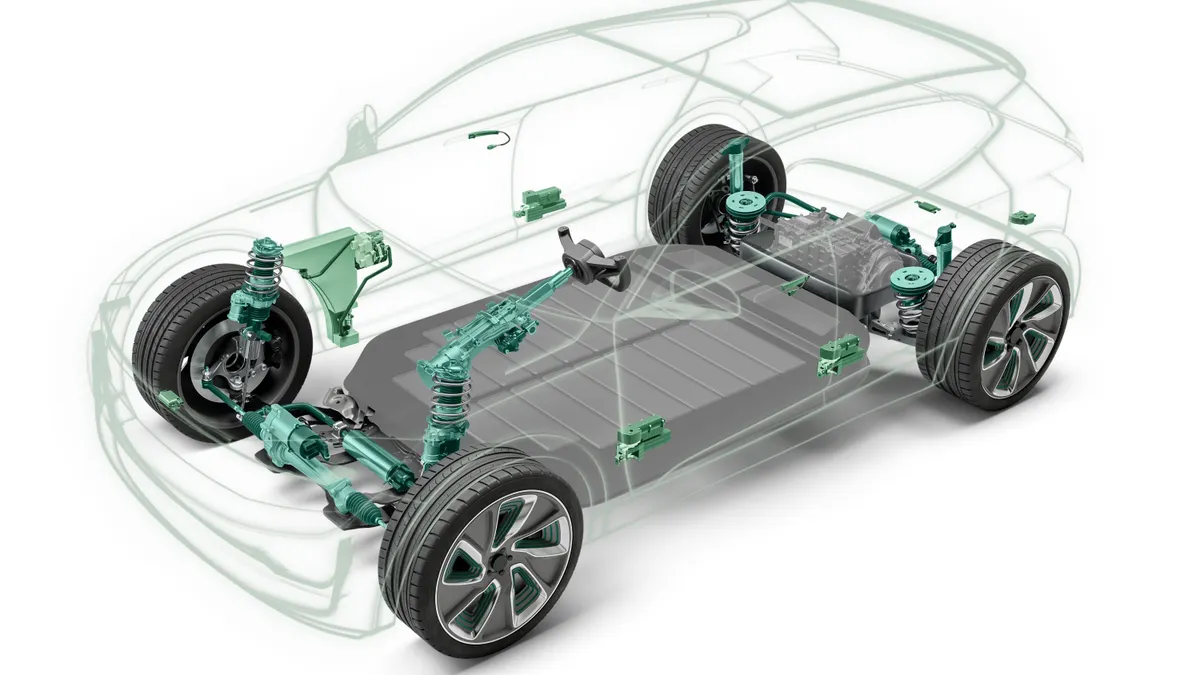
Actuators are the technologies that transform software commands into physical movement. They are responsible for every meaningful interaction between the vehicle and its occupants, from opening a door to managing steering and suspension systems.
Now more than ever, OEMs need actuation systems that are precise, efficient, scalable and seamlessly integrated.
The solution: Integrated motion technologies from Schaeffler
At Schaeffler, we see actuation as foundational for the next generation of mobility.
By combining advanced sensing, intelligent control and precision actuation, we are helping our customers create experiences that feel effortless to drivers while supporting the flexibility demanded by software-defined vehicles.
Seamless vehicle access
Ease of vehicle access often influences a consumer’s first impression. Yet many keyless entry systems still require exact gestures or physical interaction with the vehicle.
Schaeffler's radar-based sensing technology offers more intuitive interactions by detecting a wider range of gestures, while helping improve reliability in challenging environmental conditions.
Combined with compact, low-noise actuators for doors and trunks, the system allows vehicles to respond naturally and predictably, creating a more seamless driving experience from the very first interaction.
Steering reimagined for the digital era
Steer-by-wire represents one of the most significant advancements in vehicle architecture, creating new possibilities for automation and driver customization.
However, removing the mechanical connection between the steering wheel and the road introduces a new challenge: preserving authentic steering feel. Schaeffler addresses this through purpose-built steer-by-wire actuators engineered to minimize friction and improve feedback accuracy.
Advanced hand-wheel actuation technologies recreate realistic road feel while supporting greater efficiency, redundancy and system flexibility.
The result is precise control that maintains driver confidence, while offering the benefits of modern vehicle architectures.
A smarter approach to suspension
Drivers expect vehicles to deliver both comfort and control. Achieving both simultaneously has traditionally required increasingly complex suspension systems.
Schaeffler is developing scalable electromechanical suspension technologies that provide active body control, damping functionality and ride-height adjustment.
These systems can support improved ride comfort, greater vehicle stability, easier entry and cargo loading, increased efficiency through aerodynamic optimization and enhanced capability across varying driving conditions.
Schaeffler reduces system complexity while increasing functionality, giving OEMs greater flexibility to deliver a premium vehicle experience.
Bringing software-defined mobility to life
The future of mobility will be defined by intelligent software. But intelligence alone isn't enough.
Every automated function, personalized feature and AI-driven decision ultimately depends on hardware that can be executed with precision and reliability.
That's why Schaeffler develops sensors, motors, power electronics, gearing and actuators as integrated systems. The result is technology that bridges the gap between digital intelligence and real-world performance.
Because the vehicles that succeed tomorrow won't simply be those that think smarter.
They'll be the ones that move smarter.
Learn more about how Schaeffler is turning intelligent vehicle architecture into experiences drivers can see, feel and trust.