

Volvo Cars is launching the biggest-ever over-the-air software update for its vehicle infotainment system, claiming to provide customers in 85 countries with a more intuitive user experience and user-friendly layout for the vehicle’s central display screen, the automaker announced in a March 3 press release.
Volvo claims the new UX provides faster interactions and a more modern look, while also reducing the number of taps required to access different functions. Starting this week, around 2.5 million Volvo models globally will receive the new “Volvo Car UX” free of charge.
The software update will be available for Volvo vehicles as old as 2020 equipped with Google built-in. The initiative is in line with Volvo Cars’ strategy to make its cars better over time with regular OTA software updates, per the release. The update also prepares Volvo vehicles for a conversational AI experience using Google Gemini, which is set to come to eligible models this spring.
The new Volvo Car UX builds on the previous generation software launched in the all-electric EX90 and EX30 models in 2024, which the automaker said would eventually be available for 2.5 million vehicles via a software update, per a press release.
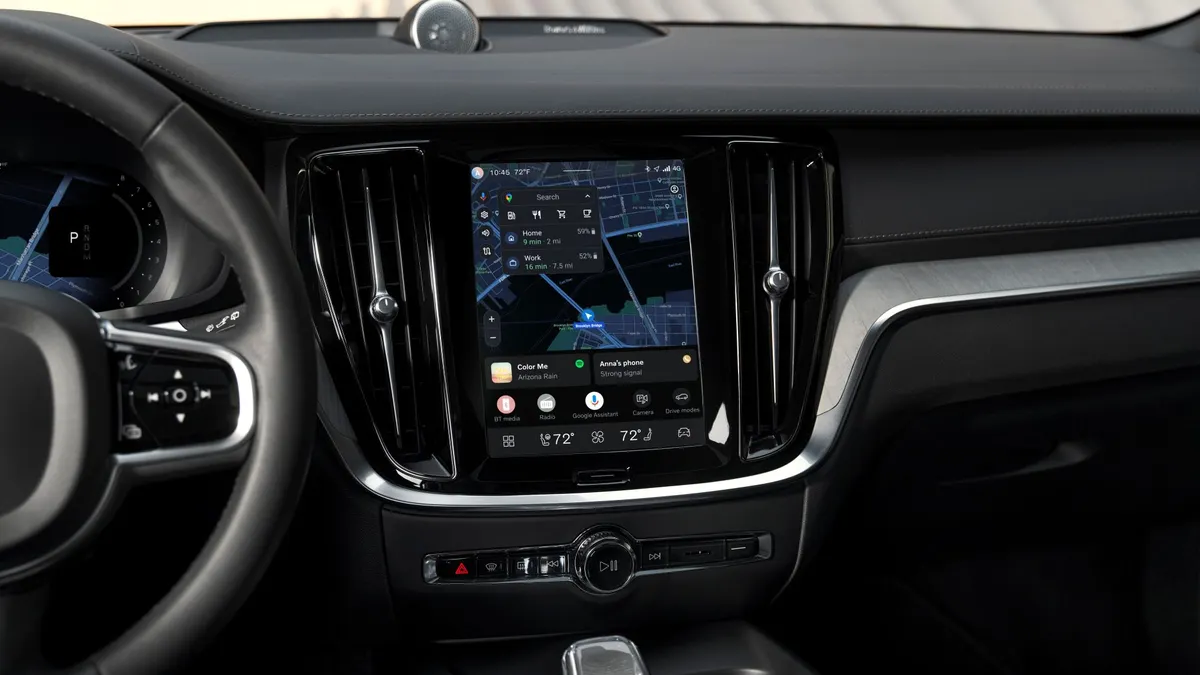
The Volvo Cars UX is based on the Android Automotive operating system with several Google services standard. The new user experience claims easier, more prominent navigation using Google Maps, along with a refreshed look. Many of the upgrades were based on research and feedback from customers.
“This update is one of the largest over-the-air updates in automotive history, leveraging years of investment in Volvo Cars’ tech stack to improve life with their cars for millions of people,” said Anders Bell, the company’s chief engineering and technology officer. “Our new user experience delivers significant updates and improvement in areas most used by drivers and directly addresses the needs and desires of our customers.”
The content displayed on the infotainment screen represents the biggest change, however. Most of the more commonly used apps and controls, such as Google Maps, media and phone, are placed on the home screen for easy access. This means that customers who are following turn-by-turn navigation and want to change the music will no longer have to leave Google Maps to access their media.
Other UX updates include the contextual bar, which changes what drivers see according to the situation. It will now display the most recently used apps. In addition, when driving at low speeds for parking, the icon for outside cameras will appear on screen, so drivers can get additional help maneuvering in tight spaces.
For drivers of Volvo’s plug-in hybrid vehicles, the new Volvo Cars UX makes it easier for drivers to switch from hybrid to electric-only power modes. Via ‘Drive Modes’ on the home screen, drivers can select ‘Pure’ mode (which prioritizes using the vehicle’s electric motors) with a single tap, alongside other options.
Volvo Cars will also begin to roll out the opportunity for all customers with vehicles equipped with Google built-in, but without its Pilot Assist driver assistance function, to purchase and download the feature for their car.