Auto dealers are entering the heart of summer facing a complex mix of market stagnation, margin compression and evolving EV dynamics. New data from Kelley Blue Book and parent company Cox Automotive show that while average transaction prices (ATPs) continue to rise modestly, so do costs – leaving retailers with fewer levers to pull as inventory grows and incentive strategies shift.
In June, the new-vehicle ATP ticked up to $48,907, just 0.4% higher than May and 1.2% above year-ago levels. Meanwhile, average manufacturers’ suggested retail prices climbed to $51,124, their second-highest level on record. That growing gap between sticker price and sale price represents a potential profitability squeeze, especially with incentives holding relatively steady at 6.9% of ATP and inventory supply now at 82 days – up from 72 in May.
“As average MSRPs continue to climb, the modest increase in transaction prices suggests the businesses are absorbing more of the burden and not passing the added costs to consumers – something that will impact profitability if the trend persists,” Erin Keating, executive analyst at Cox Automotive, says in a news release.
Brian Moody, executive editor at Kelley Blue Book, agrees that dealers are absorbing more than customers may realize – and adjusting pricing strategy accordingly.
“Consumers may well be in the position of, ‘Well, I hear that prices are going up, but I don’t see dramatic price increases. Why is that?’” Moody tells WardsAuto. “Dealers and manufacturers have all kinds of ways to hide those price increases – not nefariously, but to avoid shocking the buyer.”
These strategies, he said, include financing tools and cost distribution. “They might shift the loan term or roll costs into service agreements. Or they may bump prices on premium models, where the buyer can absorb it more easily,” he says.
Moody also notes that rising tariffs are already baked into dealers’ cost structure and can’t easily be passed along.
“It’s not like dealers are saying, ‘I can’t wait to charge consumers for these.’ (Dealers) had to pay the elevated price themselves,” he says. “The dealer owns that car. Chevrolet, Honda or Ford ... don’t own it anymore. They sold it to them. It belongs to the dealer, and they have to charge what they have to charge to make money on that.”
July Forecast: Flatline Returns
Cox Automotive forecasts July’s seasonally adjusted annual rate (SAAR) at 15.6 million sales, slightly above June’s 15.3 million but still down from 15.8 million a year ago. Sales volume is expected to rise slightly to 1.30 million units – up 2.5% from June and 1.2% from July 2024 – but this July’s longer selling month inflates that gain.
“After the sales surge in March and April, the new-vehicle market has dropped right back to where it started,” says Charlie Chesbrough, Cox Automotive’s senior economist. “High prices and high interest rates are holding the market consistently below 16 million, despite improving inventory levels.”
More tariffed products are entering the pipeline, he adds, raising concerns for the coming quarters. “As those higher costs trickle through to retail, sales will likely soften in the coming months unless the economic direction improves,” he says.
EV Market: Incentives Up, Sales Mixed
While EV ATPs declined in June to $56,910 – down from $57,236 in May and 2.8% lower year over year – incentives hit a record 14.8% of ATP, or more than $8,400 per vehicle.
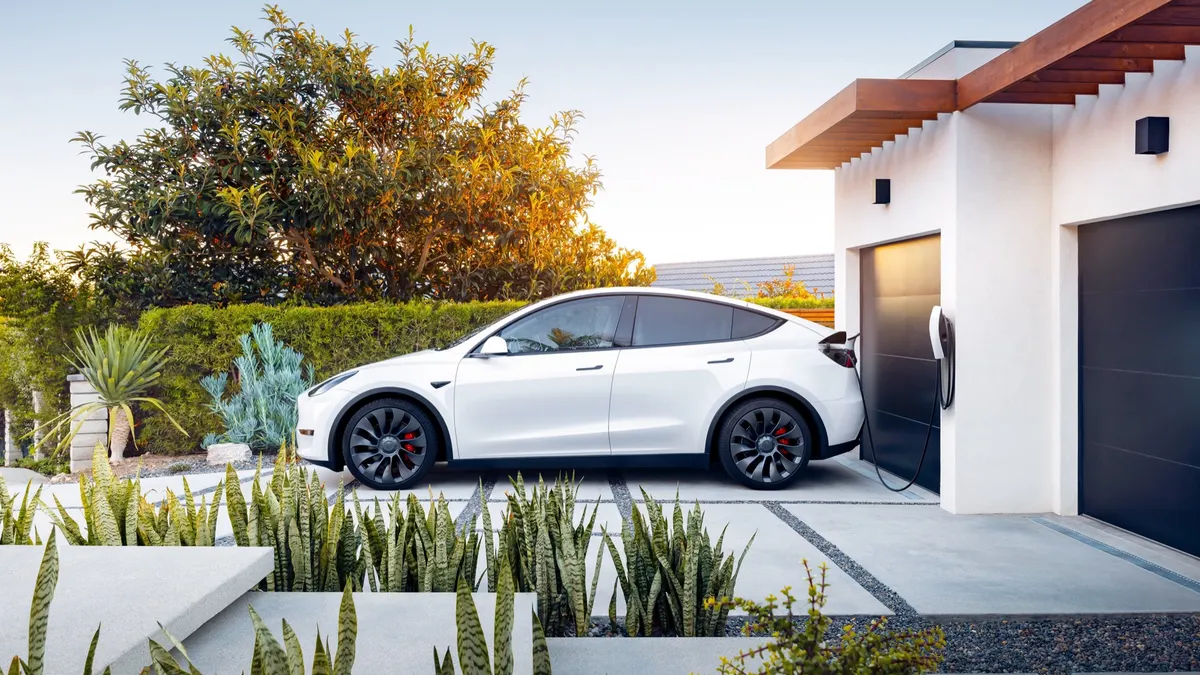
Tesla’s sales continued to sag, down over 10% year to date, but the brand posted its best 2025 month in June with 25,095 Model Y deliveries. The Model Y’s ATP fell to $53,224. J.D. Power does not say if this price reflects the federal tax credit, though it’s unlikely.
Moody says the likely expiration of the $7,500 federal EV tax credit could have unexpected benefits.
“If the $7,500 tax credit goes away, it’s my belief that anybody who’s for electric vehicles – that’s going to be a net win,” he says. “Because now, what automakers are going to have to do is say, ‘You know what? We need to compete on an even-level playing field.’ Tesla didn’t need the credit to be hot – it was hot because it was different.”
He sees a growing opportunity in the used-EV space, driven by fast depreciation and generous warranties. “Used electric cars are an amazing deal,” Moody says. “They depreciate fast, and most of them still have a battery warranty for 8 years or 100,000 miles (161,000 km).”
End of the Entry-Level Era
The Mitsubishi Mirage, long the only new car priced below $20,000, saw its ATP reach $18,484 in June – but with production halted and fewer than 1,700 units remaining nationwide, the segment is vanishing.
That disappearance will push more budget-focused customers toward certified pre-owned (CPO) or value trims, a shift dealers should monitor closely.
Dealer Takeaways
1. Mind the margin gap: With MSRP rising faster than ATP, dealers should reassess pricing transparency and explore how to position F&I products and loan term flexibility to preserve profitability.
2. Prepare for tariff pass-through pressure: As more vehicles affected by tariffs arrive, pricing will need to reflect rising wholesale costs without alienating retail buyers.
3. EVs require dual focus: While new EV sales soften, used EVs offer a compelling pitch. Educating consumers on warranty transfers and the total cost of ownership could unlock new volume.
4. Entry-level void = used opportunity: With no sub-$20K new cars left, focus on used inventory and affordable trims to capture price-sensitive buyers.
5. Educate your customers: Moody advises: “Do tons of extra research and figure out what that car is going to cost you, not just the sticker. Look at the whole picture – interest, service agreements, destination charges and how long you’re financing. It all matters.”
For now, the road ahead remains uncertain – but dealers who stay nimble on pricing, smart on EV strategy and transparent with buyers will be best positioned to weather what Cox calls the “big squeeze.”