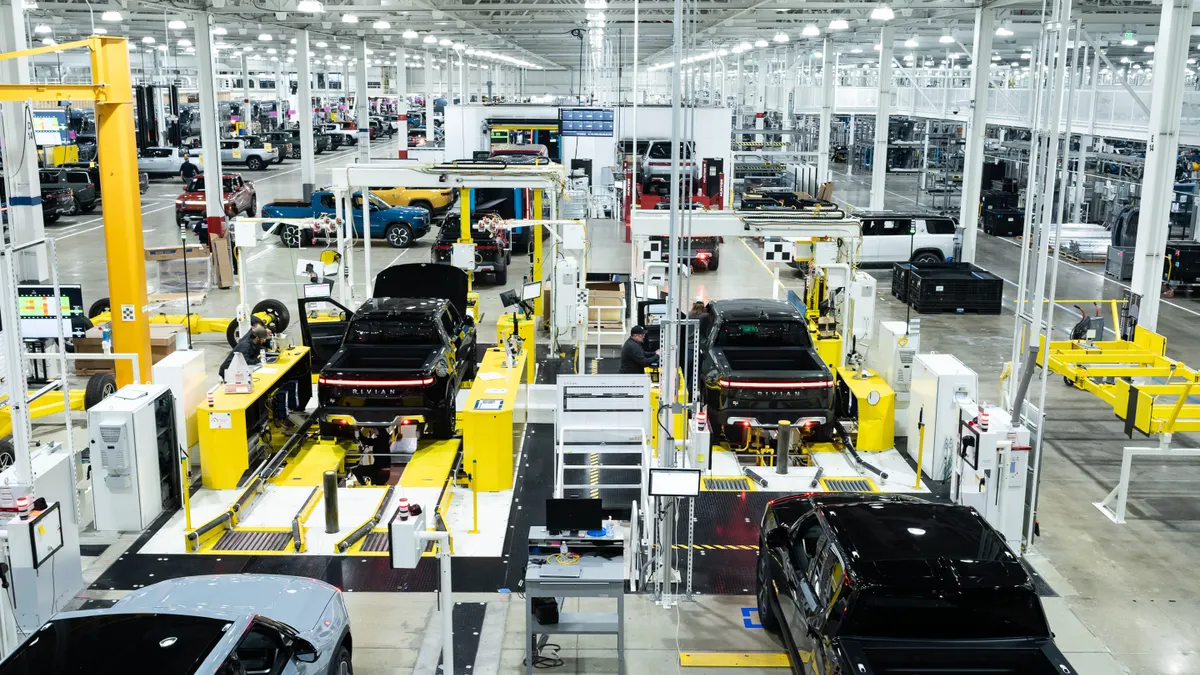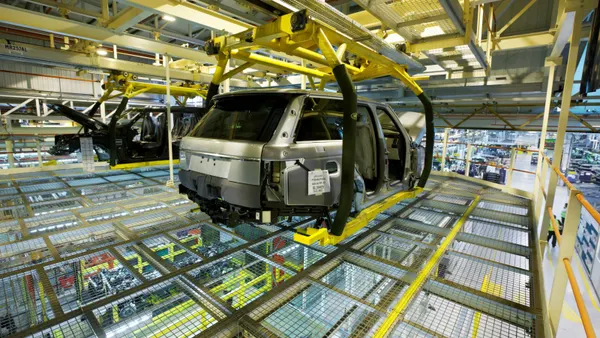


Vehicle manufacturing output fell dramatically in the U.K. in April owing to automaker uncertainty over U.S. import tariffs and the timing of the Easter holidays.
Data published by the nation’s industry organization, the Society of Motor Manufacturers and Traders (SMMT), show vehicle production fell 15.8% to 59,203 units, the lowest level for the month since 1952 excluding the pandemic lockdown months in 2020.
The result is also the industry’s lowest start to a trading year since 2009, when the economy suffered the after-effects of the financial crisis caused by subprime mortgage bank lending in the U.S.
A late Easter saw April 2025 output fall compared to the previous month where, conversely, output was ramped up to compensate, according to the SMMT. This was exacerbated by automaker model changeovers and lower demand in key export markets.
As a result, passenger car production fell 8.6% to 56,534 units while commercial vehicle output also declined, falling 68.6% to 2,669 units, driven primarily by a plant closure and normalizing of demand for new heavy goods vehicles following robust post-pandemic growth.
Car production for export also fell 10.1%, while production for the domestic market, always a smaller proportion of volumes, also decreased 3.3%.
Shipments to the U.K.’s two largest global markets, the EU and U.S., fell 19.1% and 2.7% respectively, although the EU still took more than half of all exports while the U.S. received 16.5%. Conversely, exports to China and Turkey rose 44.0% and 31.2%, respectively.
Mike Hawes, SMMT chief executive, says “urgent action” is required to boost domestic consumer demand and international competitiveness.
“Government has recognized automotive manufacturing’s critical role in driving the U.K. economy, having successfully negotiated improved trading conditions for the sector with the U.S., EU and India in the space of a month.”
However, Aidan Rusby, CEO and founder of digital finance provider Carmoola, says the fall in new-vehicle production also puts the squeeze on consumers who are forced to turn to the used-car market where prices are being pushed up because of the lack of new vehicles.
In an email to WardsAuto Rusby says demand for used vehicles in the U.K. is already strong “and this could intensify as buyers look for more affordable or available alternatives.”
“In the short term, this could push prices up, particularly for nearly-new models,” he adds.