Some might say Toyota’s 2026 RAV4 was always destined to succeed.
The RAV4 was the top-selling midsize crossover in 2025, and its popularity has consistently grown over its 30-year history. Automotive experts told WardsAuto earlier this year the RAV4 succeeded, in part, due to its incremental improvements in the vehicle’s quality.
And its 2026 lineup, which also marks the launch of the model’s sixth generation and is scheduled to begin arriving in December 2025, has a plethora of upgrades Toyota dealers can boast to potential buyers, executives told WardsAuto during a press drive program earlier this year.
Many of the improvements have to do with technology. The 2026 RAV4 has a fully electrified lineup, and all vehicles will come with one of two powertrains: hybrid or plug-in hybrid. In addition, the RAV4 also got a software upgrade, as all vehicles were equipped with a next-generation multimedia system as well as with Arene, the automaker’s software-defined vehicle platform.
In a more subtle shift, Toyota also revamped its approach to marketing the vehicles. The lineup now focuses on giving customers three “emotional grades” they want to drive: Core, Rugged, or Sport, for a total of seven trims.
In comparison, the 2025 lineup included 11 variations if you count the four ICE-powered RAV4 trims alongside the seven RAV4 Hybrid trims. While buyers of the 2026 RAV4 will still have to pick between a hybrid or plug-in hybrid powertrain, and between all-wheel drive or front-wheel drive for various grades, categorizing the trims into “emotional grades” could help simplify the customer’s buying experience.
Altogether, the improvements lead to a vehicle that either matches or outperforms the fifth generation in nearly every metric, while sticking to the vehicle’s roots, Toyota RAV4 Chief Engineer Yoshinori Futonagane told WardsAuto in a translated interview.
“Until just a little bit recently, you know, when you mentioned electrification, sometimes, some people look at it as [listless] or maybe it’s a little bit boring,” Futonagane said. “But this is not that kind of car. We electrified it, and it’s fun.”
Design and power shines across all grades
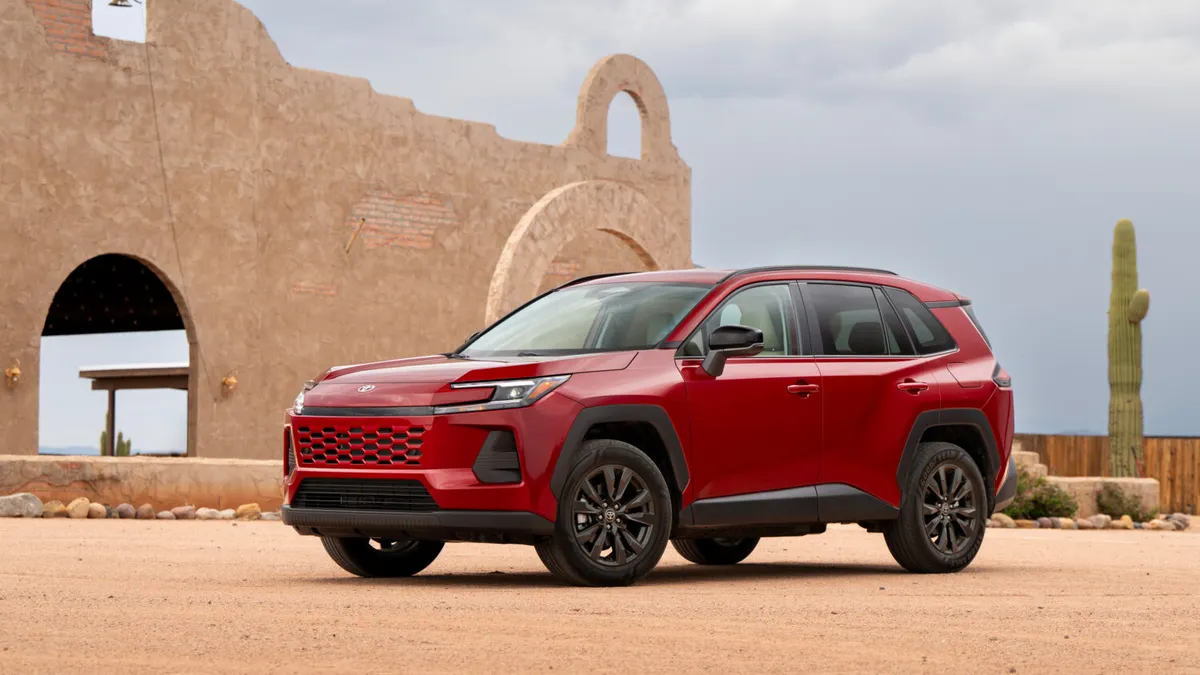
Toyota’s focus on providing customers with a fun, personality-driven experience is evident from the moment you see the Core, Rugged and Sport trims side-by-side.
Compared to the Core designs (LE, XLE and Limited), the Sport designs (SE, XSE and GR Sport) are differentiated by lighter sport alloy wheels and interior stitching accents that immediately provide a more performance-oriented feel. Meanwhile, the single Rugged design (Woodland) comes already equipped with all-terrain tires and a raised roof-rack.
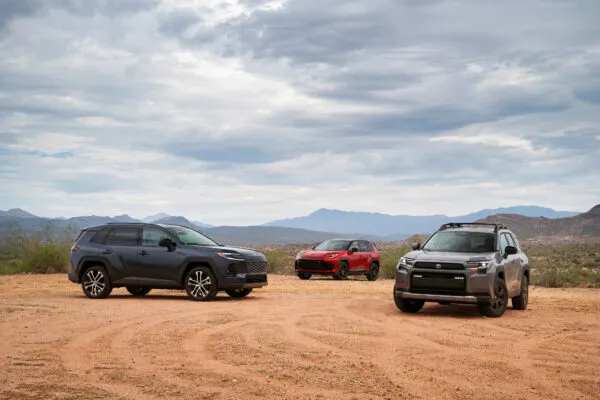
Don’t let the exterior fool you, though: Each vehicle also comes with an impressive electrified powertrain.
“This time, with the electrification systems that we have, hybrid system and plug-in hybrid systems are the main two powertrains,” Futonagane said. “We were able to, whether it’s on-road or off-road, match or exceed the performance of the fifth-generation gasoline-powered setup with these new electrified powertrains.”
While Toyota did not make any fifth-generation vehicles available for testing during the media drive event, the horsepower stats tell the story. The 2026 hybrid models with all-wheel drive have a 236 net combined horsepower, Toyota said in a press release, up from 219 horsepower during the fifth generation. Fuel economy also increased across the board, according to Toyota.
One of the ways Toyota improved vehicle performance was through its design choices, Futonagane said. That included being thoughtful about the wheels and materials for the Sport grades and considering how large battery packs should be for the sixth generation.
“One of our first goals was to make sure that we put in a larger capacity battery that could maximize cruising range. So, we modified the underfloor of the platform to make sure we could squeeze in a bigger battery,” Futonagane said.
Next-gen infotainment and software capabilities upgrade user experience
The 2026 RAV4 is also Toyota’s launch vehicle for a few other technologies: an upgraded version of Toyota Audio Multimedia system, and the Arene Software Developed Vehicle platform.
While it’s hard to test the impact of a software platform on a test drive, Toyota says it is the foundation for much of the technology in the vehicle, such as the safety features and multimedia system. On that note, every new RAV4 comes with an extensive suite of safety features as part of Toyota Safety Sense 4.0, including pre-collision detection and lane tracing assist. More-premium trims receive additional software, multimedia features and connected vehicle features, while others can be enabled via a subscription service.
Enabling all of this for the user is the star of the show: the new infotainment console, which felt intuitive, quick and powerful in terms of the features it included.
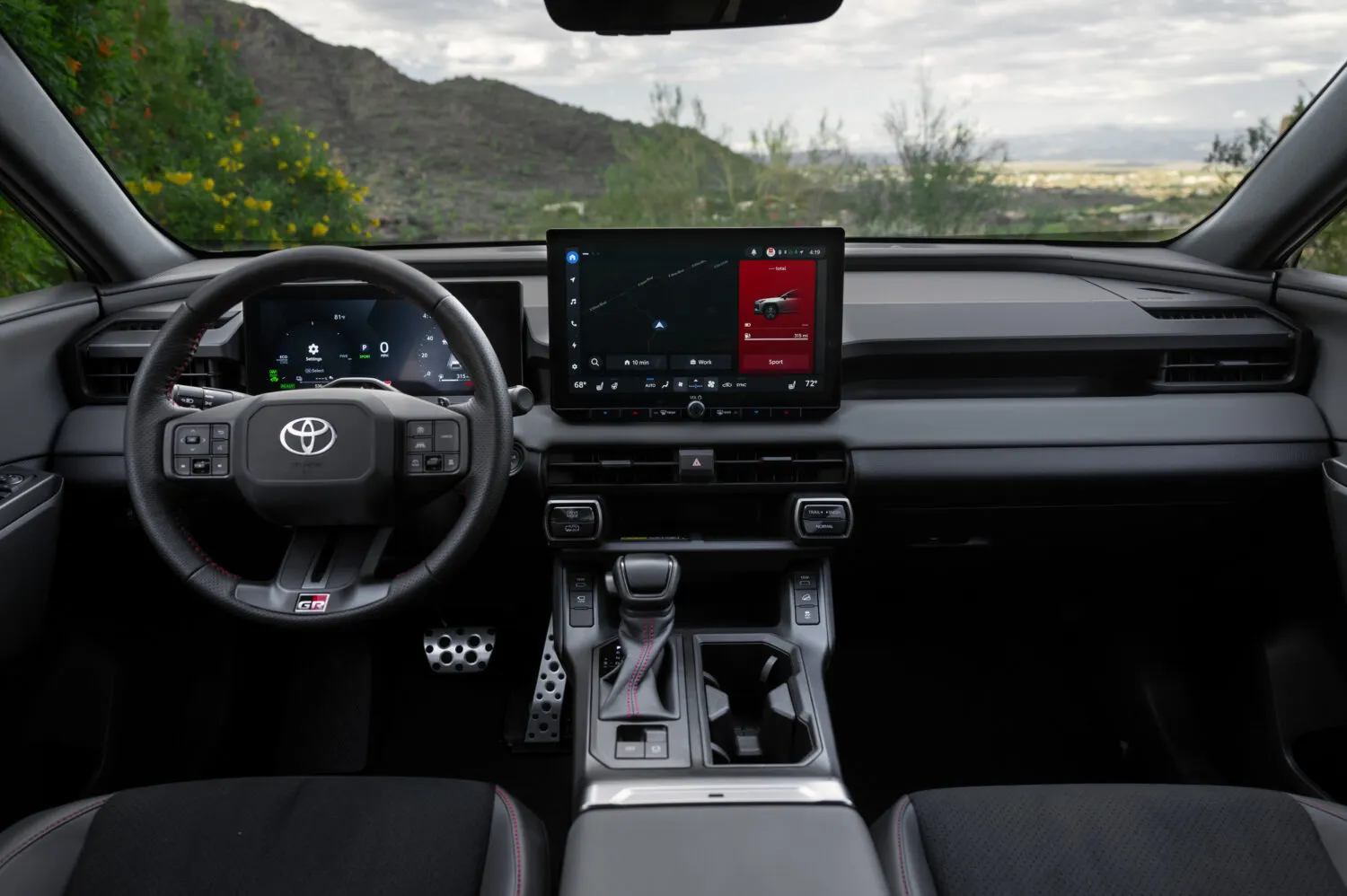
Quick and fast were two of the things Toyota’s engineers worked on, said Tuhin Diptiman, principal manager at Toyota North America and one of the people behind the upgrade.
“One of the things we learned from a previous generation was not only just building a really good multimedia system, but things where daily experiences could have been a little bit better,” Diptiman said.
In a 15-minute show-and-tell with WardsAuto, he recited a list of features that had improved: the home screen’s navigation was smoother, the “Hey, Toyota” voice-assistant was more powerful, advanced driver assistance systems could now be toggled on and off via the center console, among others.
But most impressive to WardsAuto was the philosophy Diptiman shared when talking about designing a wide variety of user experiences for the customer.
He gave Android Auto as an example, saying some users try to connect via Bluetooth, while others begin via the home screen, or even try audio controls. So, they built many different navigation paths into the system for a wide variety of settings.
“No matter which way you go, whatever your preference is, you will find it,” Diptiman said.
In a way, the conversation reinforced points other Toyota executives made throughout the day about the small choices it takes to build a vehicle that’s customer friendly.
“Ultimately, our philosophy has always been customer-first,” Owen Peacock, general manager for vehicle marketing and communications at Toyota, said in an interview with WardsAuto earlier that day. “We want to build where we sell, and we want to listen to the customer's voice in the market to really help Toyota drive our decision-making.”
Whether it’s redesigning the lineup strategy to focus on “emotional grades,” engineering the vehicles to be both electrified and fun, or designing an infotainment system that is easy to navigate, it’s clear Toyota’s team had customers in mind.