Dive Brief:
- Tesla reported a record-high number of deliveries in Q3 of 497,099 vehicles, a 7% year-over-year increase, but its operating profit fell by 40% from $2.7 billion to $1.6 billion, the company reported in its Q3 earnings on Wednesday.
- The carmaker’s Q3 sales were in part boosted by electric vehicle shoppers rushing to beat an expiring tax credit on Sept. 30. Tesla's YoY automotive revenue increased 6% in Q3 to $21.2 billion, but the jump did not help its bottom line.
- The company cited higher fixed costs per vehicle due to tariffs, lower revenue from the sales of regulatory credits, as well as a decline in Full Self-Driving (FSD) revenue compared to the prior year, for the declines, which also resulted in a 46% YoY drop in Tesla’s operating margin from 10.8% to 5.8%.
Dive Insight:
Tesla’s total Q3 revenue, which includes its energy storage business, increased 12% YoY to $28.1 billion, and by nearly 20% from Q2.
Sales of the Model 3 and Model Y increased 9% from Q3 2024, reaching 481,166 vehicles. However, combined sales of other vehicles, including the more expensive Model S and Model X and Cybertruck, fell by 53% compared to a year ago, as customers look to more affordable EV options on the market. Tesla does not break down the sales in individual models in its quarterly sales reports, but the declines indicate falling demand for its more expensive offerings.
“Tesla’s single biggest issue today is the power of its brand, the engine of its outsized stock performance,” said Richard Exon, founder at UK-based consulting firm Joint, in an email to WardsAuto. “These latest results point to a continued cooling of sentiment which requires attention.”
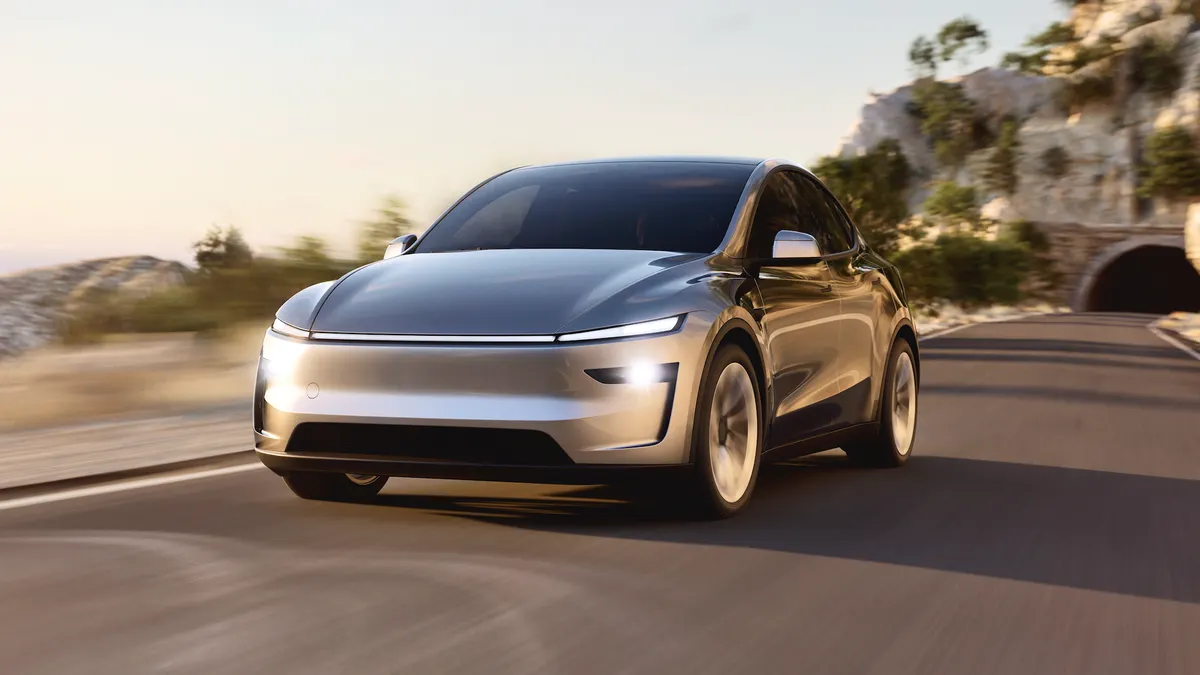
But Tesla said it's making its EV model lineup more accessible with the expiration of the federal tax credit last month. The company recently launched the new Model 3 starting at $36,990 and the Model Y Standard priced at $39,990 in the U.S.
But outside of Tesla's core automotive revenue, its stationary energy storage business continues to see significant gains. Tesla said it deployed a 12.5 GWh of energy story capacity in Q3, an 81% YoY increase. Revenue from the company’s energy storage segment also grew by 44% YoY to $3.4 billion.
Looking ahead, Tesla aims to make additional investments in AI and to scale its robotaxi business. The investments increased its YoY operating expenses by 50% to $3.4 billion. The company also said it is expanding its AI training computer capacity which will support its future autonomous driving development.
Tesla CEO Elon Musk remains bullish on the company’s continued investments in AI.
“A critical inflection point for Tesla and our strategy going forward as we bring AI into the real world,” Musk said during its earnings call. “No one can do what we can do with real world AI.”
The company also said its Cybercab robotaxi, Tesla Semi, and Megapack 3 battery storage units are all on schedule for volume production beginning in 2026. Tesla said that construction has begun on the Cybercab assembly line in Texas and for the Tesla Semi production in Nevada.
Tesla said in its earnings report that it remains focused on “optimizing and leveraging existing production capacity.”
“Our focus remains on scaling our core hardware business by maximizing our deliveries and deployments, as these products will deliver increasing value to our customers over time via services powered by AI,” the company said in its earnings report.