Editor’s note: John McElroy is the president of BlueSky Productions, which produces Autoline Daily, and a longtime opinion columnist for WardsAuto. Views expressed here are his own.
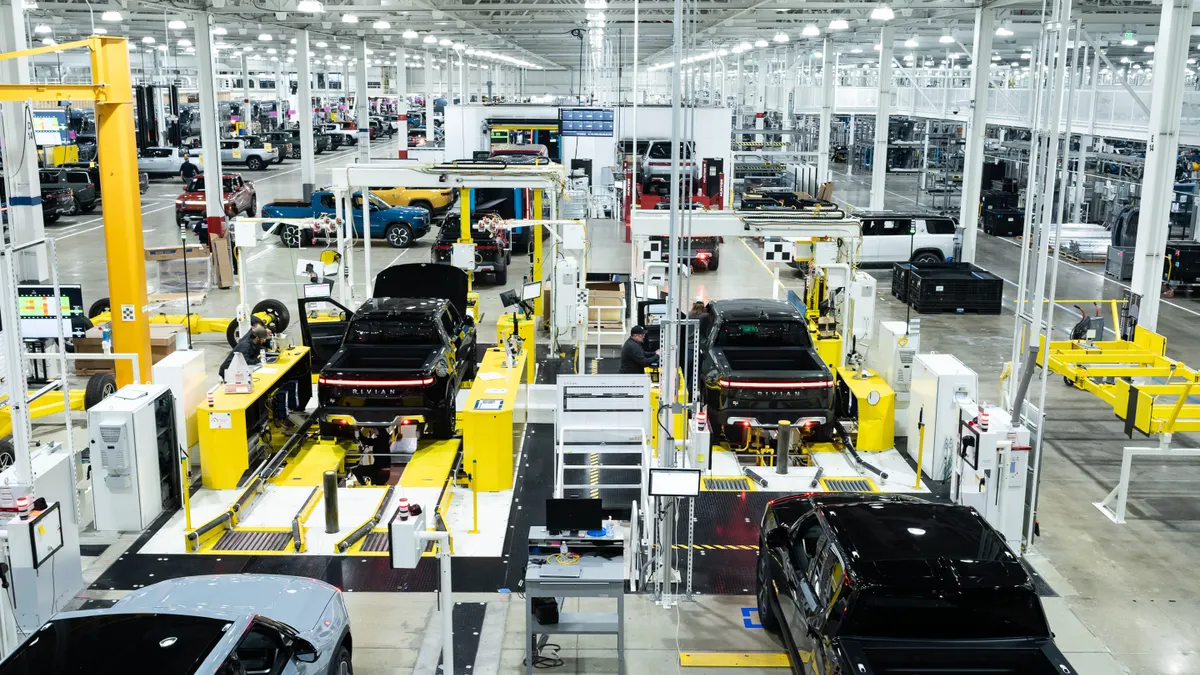
Robots in car factories are nothing new. General Motors started using them in the 1960s and they’ve been around for over half a century. Every auto plant today has hundreds of them. But humanoid robots are on a different plane altogether. I guarantee that once you see them in action, you’ll begin wondering about how many factory jobs they’ll eliminate.
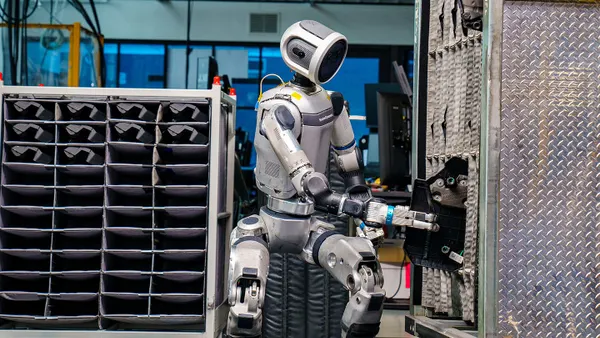
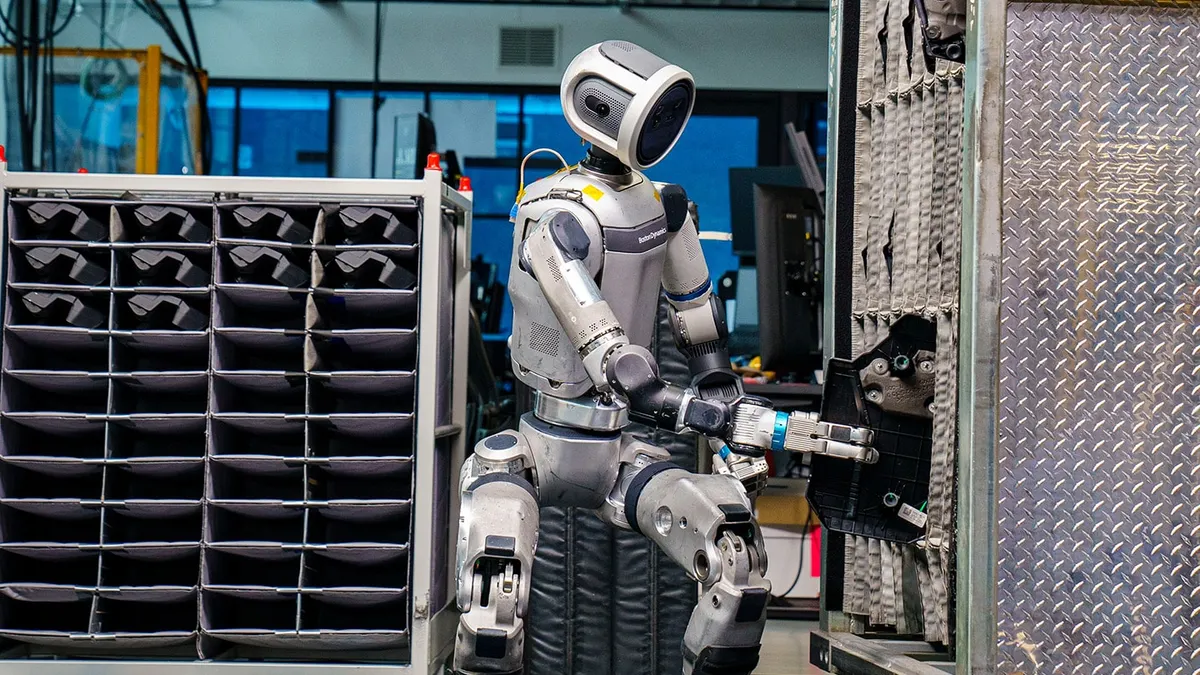
It’s one thing to see a traditional welding or painting robot: a unit that is bolted to the floor, with one arm that moves around in a restricted area, doing repetitive tasks. It’s quite another thing to see a robot with hands, arms and legs strolling smoothly across the shop floor, picking parts out of a bin and bolting them onto a car.
I saw Boston Dynamics’ humanoid robot called Atlas in action at Hyundai’s press conference at CES in January (Hyundai owns Boston Dynamics), and my jaw dropped. I’ve seen plenty of videos of humanoids, but seeing them in person is truly impactful. I believe they will be a game-changer for the industry.
People have been worried about robots replacing humans ever since robots first went into manufacturing facilities. But it really hasn’t happened. According to the Bureau of Labor Statistics data presented by the Federal Reserve Bank of St. Louis, there were about 900,000 people employed in automotive manufacturing in the U.S. in 1979 and there were about 1 million in 2024, despite far more robots and automation in plants.
Up to now, robots have been used to replace humans in dangerous, dirty and repetitive jobs. They do almost all the welding and painting in assembly plants. They do the hot-parts handling in casting and forging plants. And they’re used for parts transfers between giant presses in stamping plants. No one who did those jobs in the past ever complained about a robot taking their job.
As cars became more complicated, with more features, components and equipment, the people displaced by robots were simply moved to other jobs on the assembly line. That’s probably why total automotive employment has stayed about the same.
Humanoid robot makers, like Boston Dynamics, argue that humanoids will actually create more jobs, not eliminate them. They point out that humanoids use all kinds of electric motors and sensors, and that the bodies are made from castings, moldings and stampings. They also need to be trained, repaired and serviced. And that’s why the robot companies say they will create more jobs.
I have my doubts.
As one Tier 1 CEO told me privately, a humanoid robot will pay for itself in two years, even if it costs $250,000. “One robot can replace two workers because it can work two shifts a day,” he pointed out. Even more, humanoids don’t need bathroom breaks, don’t take vacations, are never absent or late, and don’t get sick.
Automakers and suppliers may not even have to buy them. Hyundai wants to offer robots-as-a-service, which suggests a lease program that would include maintenance and repair. So, there would be minimal up-front capital expense to equip a plant with humanoids.
And Hyundai has big plans. It is tooling up to make 30,000 humanoids a year at its sprawling manufacturing complex near Savannah, Georgia, in 2028.
Hyundai isn’t the only automaker interested in making humanoids. So are Tesla, XPeng and GAC, while BMW and Mercedes are already testing them in assembly plants. Toyota and Honda were early pioneers in developing humanoids two decades ago, but have either fallen behind the current state of development or are keeping a tight lid on where their efforts stand now.
Not everyone believes that humanoids pose a big threat to factory jobs. They say today’s cars and components can be redesigned with automation in mind, and simple pick-and-place automation is far more cost-effective than using humanoids. And they could be right.
But right now, manufacturers the world over are facing a shortage of factory workers. It’s increasingly difficult to find people who are willing to work in a factory, especially younger people. According to data from the Bureau of Labor Statistics, the number of manufacturing openings has been exceeding 500,000 some months, far exceeding the number of hires. And a study by Deloitte and the Manufacturing Institute says that gap could grow to 3.8 million by 2030. Meanwhile, the Trump Administration is pushing to bring as many manufacturing jobs back to the United States as fast as possible.
So who’s going to work in these jobs? Humanoids may turn out to be the perfect solution. And there’s an ironic ring to that: Instead of humanoids taking jobs away from humans, they may just end up filling the jobs that humans don’t seem to want.