New-vehicle prices crept higher in June, even as consumer affordability flatlined and the industry braced for a changing electrified-vehicle landscape shaped by new policy and evolving customer demand. Dealers are navigating what Cox Automotive Executive Analyst Erin Keating calls “the big squeeze,” with margins threatened as costs rise faster than what consumers are willing to pay.
“The months ahead are shaping up to be 'the big squeeze,’ as the real headline this summer will be the growing disconnect between rising costs for automakers and dealers and relatively flat consumer prices,” Keating says. “As average MSRPs continue to climb, the modest increase in transaction prices suggests the businesses are absorbing more of the burden and not passing the added costs to consumers – something that will impact profitability if the trend persists.”
According to just-released data from Cox Automotive’s Kelley Blue Book, the average transaction price (ATP) for a new vehicle in June was $48,907 – up 0.4% from May and 1.2% higher than a year ago, marking the largest year-over-year increase in 2025 so far.
Still, that’s well below the 10-year average increase of 3.9%. Meanwhile, new-vehicle manufacturers’ prices rose to $51,124 in June, just a hair less than December’s record high of $51,990, and up 2.3% from the previous year.
With sales slowing, dealer inventory has swelled to 82 days’ supply, up from 72 in May. Incentives ticked upward to 6.9% of ATP, compared to 6.5% a year ago.
EV Prices Fall, But So Do Sales
EV pricing dropped again in June, even before the One Big Beautiful Bill Act (OBBBA) cut incentives. The average transaction price for a new electrified vehicle fell to $56,910, down from $57,236 in May and 2.8% lower than a year ago. EV incentives surged to a record 14.8% of ATP – more than $8,400 per vehicle including the $7,500 tax credit.
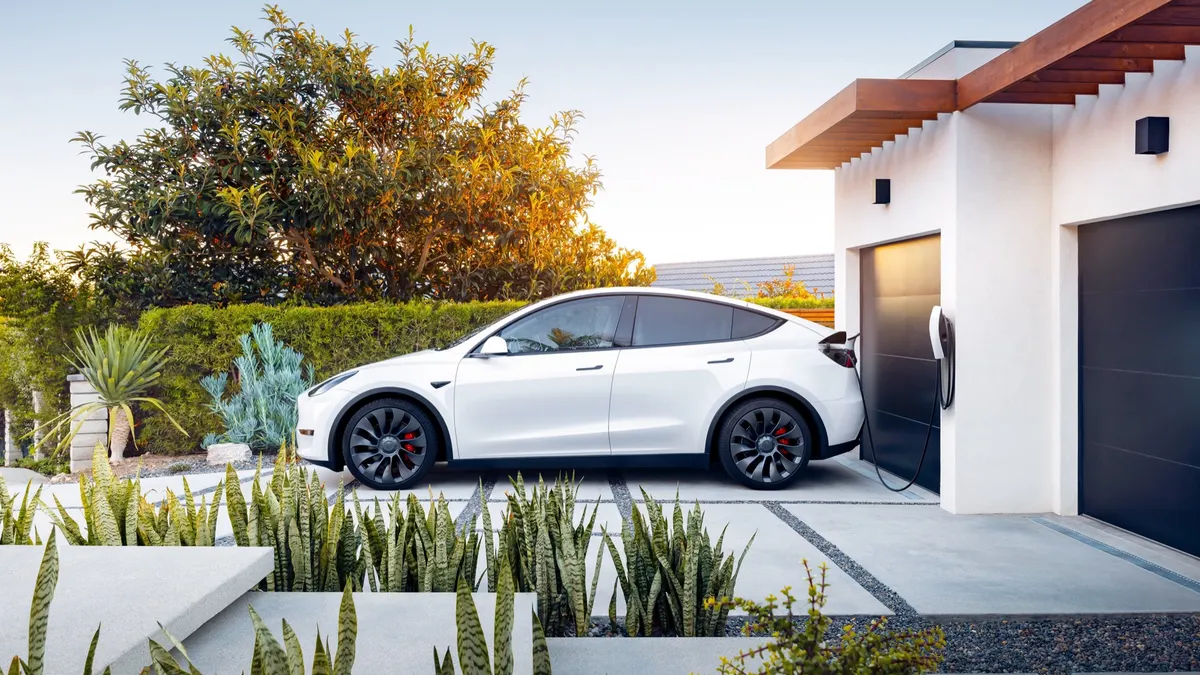
Despite those price breaks, EV sales growth is stalling. Tesla, which still leads the EV market, saw its ATP dip to $54,989. Though the company sold 25,095 Model Ys in June – its strongest month of 2025 – Tesla’s sales are down more than 10% year-to-date. Ford and Kia are also reporting year-over-year EV sales declines.
Dealers React to EV Policy Shifts
Veteran Virginia dealer Tim Pohanka, vice president and executive manager of the 23-dealership Pohanka Auto Group, located in the Washington, DC, area, says he’s seen eight years of political whiplash and believes the recent policy pivot under the OBBBA may finally allow the market – not Washington – to steer the EV conversation.
“I think that EV production will be cut,” Pohanka tells WardsAuto. “I think the incentive for manufacturers can be based upon what they have to produce, like they've already scheduled to produce. Some companies have already talked about how they're not going to develop new EVs for the market yet. So, I think you're going to start to see the quest to build the right EV.”
Pohanka says the bill’s rollback of some EV tax credits and its new loan interest deduction could “lead to hybrid (vehicle) production,” which he called “a big win for the environment” and “a big win for consumers.”
He expects a near-term rush as shoppers try to take advantage of remaining EV credits before they expire this fall, and notes that new federal and state EV ownership fees will also change the cost equation.
“At the right price, anyone will drive one,” Pohanka says. “It's just a question – what's that equilibrium price going to be?”
Manheim Watching Used EV Volume Surge
At Manheim, which is investing heavily in EV readiness across its auction network, the long-term view remains clear: used EVs are coming – fast.
“Our message to dealers is there’s going to be a lot more of these EVs coming…because we can look at the data,” Mark Schirmer, director of industry insights at Cox Automotive tells WardsAuto. “A million (EVs sold) last year, another million this year. All those eventually become used cars. There’s no stopping that.”
While EV resale demand has softened recently, Schirmer emphasizes that much of the current dealer conversation is about readiness: charging infrastructure, technician training and understanding how to sell to a different kind of customer.
“I do think a lot of it is education,” he says of EV sales success “How to sell EVs, how those customers are different from ICE (internal-combustion engine) vehicle buyers. And we remain pretty bullish on the idea that you can sell EVs. It’s just going to be learning to do that and figuring out how much profitability there’s going to be in that for a while.”
Schirmer also says Manheim is investing in battery lifecycle management, repair services, and reconditioning tools – “solutions that will be necessary” for both OEMs and dealers. He notes that independent dealers, in particular, face uphill battles without access to EV reconditioning or charging capabilities.
“If you're an independent dealer… you're going to need charging facilities,” he says. “You have to have some ability to recondition those vehicles or maintain those vehicles or just sort of have the capabilities to manage a different kind of vehicle. The simplest thing is charging stations – and those are big investments.”
End of an Era
In one sign of a changing market, the last new vehicle transacting under $20,000 – the Mitsubishi Mirage – has officially been discontinued. In June, the Mirage averaged $18,484 with virtually no incentives. Fewer than 1,700 units remain available nationally, and they are expected to vanish by the end of summer.
The low-cost Mirage’s demise underscores a larger challenge for dealers: offering affordable entry points while managing shrinking margins and rising costs.
“My first thought was, “it's going to be interesting to see how dealers manage the next three months,’ because you're going to have a certain amount of (EVs) that are already on dealer lots, and a certain amount that have been ordered that are in the pipeline already, and then you're going to have a certain amount to purchase,” Karl Brauer, executive analyst, iSeeCars tells WardsAuto.
There will be a race to buy EVs before the Sept. 30 EV tax incentive deadline, but then Brauer and other insiders expect to see interest falter. Still, the $10,000 annual tax deduction on qualifying auto loans may help the EV market maintain some equilibrium.
Rising MSRPs, falling EV prices, expired tax credits and infrastructure investments all point to a summer of recalibration. But with the right product mix, dealer training and consumer messaging, there’s still room to profit – especially for those who can adapt quickly, industry insiders say.