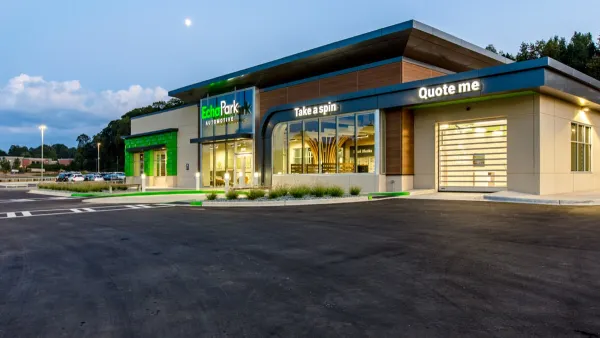
Sonic Automotive provides what one auto analyst attending its Q3 2025 results called a “used car market test tube” showing the differences between used-car operations at Sonic’s franchised, new-car dealerships, vs. its EchoPark used-only channel.
The upshot for the third quarter 2025 is that new-car dealerships have a big advantage: better access to customer trade-ins, at better prices than wholesale used-car auctions.
“From a franchise perspective, obviously, we trade for a lot more cars on the franchise side because of the new-car business,” said Jeff Dyke, Sonic president, in response to a question including the “test tube” comment, from Jeffrey Lick, an auto analyst for Stephens Inc., Little Rock, Ark., in a conference call Oct. 23.
Different outcomes
Based in Charlotte, N.C., Sonic reported 111 franchised, new-car dealerships as of Sept. 30. For the third quarter, its franchised used-car operations returned some impressive increases.
Used-vehicle gross profit was $39.2 million at Sonic’s new-car dealerships in the third quarter, an increase of 13% vs. a year ago, on a same-store basis. That was on a volume increase of just 3%, to 25,628 units, the company said.
Sonic’s EchoPark used-only channel gets trade-ins, too, but most of its inventory usually comes from wholesale auctions. EchoPark has been another story.
Used car sourcing
On what Sonic calls a “same market” basis – that is, not counting markets where EchoPark operations have been suspended – EchoPark used-vehicle gross profit was $1.1 million in the third quarter, down 75% vs. a year ago. Unit volume was 16,353, down 8% vs. a year ago.
Besides fewer trade-ins for EchoPark, the parent company said it also missed out on around 2,000 off-rental units in the third quarter it had expected to purchase, because rental fleets kept cars in circulation longer.
Sonic opted to do without, rather than try to replace those units with costlier auction purchases, Dyke said in the call. In the fourth quarter and going forward, he said the company would be more aggressive buying cars “off the street,” from individual sellers who bought their cars somewhere else.
Background of growth
Here’s some background. At the end of the third quarter, EchoPark had 18 active stores in 10 states. At the end of 2022, Sonic reported 52 stores in its EchoPark segment, in 21 states.
EchoPark’s biggest growth took place in 2021, as the nation slowly recovered from the COVID-19 pandemic, followed by a resulting shortage of computer chips. Those factors created low inventory for new vehicles and nearly new used cars, relative to high demand.
Three-year-old and newer used vehicles were central to the EchoPark strategy, but they became scarcer and more expensive than anyone expected. In July 2021, Sonic launched a “strategic review” of EchoPark, but called off the review a year later without taking action. In 2023, Sonic closed several EchoPark locations and froze opening new ones.
Making a comeback?
Meanwhile, Dyke said Sonic is starting to register some improvement in acquisition costs for used vehicles, and the industry as a whole expects an increase in off-lease units beginning in 2026. The uptick in off-lease units reflects a modest recovery in leasing, starting three years ago.
Sonic CEO David Smith said in the conference call: “We believe we are well positioned to resume a disciplined store opening cadence for EchoPark in 2026, assuming the used vehicle market conditions sufficiently improve.”