Dive Brief:
- The National Highway Traffic Safety Administration’s Office of Defects Investigation opened a probe on Jan. 16 into the adequacy of a previous General Motors recall in April 2025 involving nearly 598,000 SUVs and pickups equipped with 6.2L V-8 gas engines for defects that have led to catastrophic engine failures without warning in some cases.
- The agency’s investigation is the latest phase in NHTSA’s review of GM’s V-8 engine issues. The probe began with a preliminary evaluation launched by the NHTSA on Jan. 16, 2025, for an estimated 887,000 GM vehicles, as well as a related engineering analysis opened in October 2025.
- The NHTSA’s ODI opened its query after it received 36 vehicle owner questionnaires alleging engine failures in GM vehicles that already received the recall remedy last year.
Dive Insight:
The vehicles GM recalled last year include the 2021-2024 Chevrolet Silverado 1500, Suburban and Tahoe; GMC Sierra 1500, Yukon and Yukon XL; and Cadillac Escalade and Escalade ESV models.
GM’s recall last year also came after the automaker identified more than 28,000 field complaints and incidents in the U.S. market that are potentially related to engine mechanical defects, the first of which was received in April 2021. GM also identified 12 crashes and 12 injuries in the U.S. potentially related to sudden engine failures.
The defect involves the connecting rod and crankshaft components, with the recall report pointing to rod bearing damage caused by sediment and debris, as well as crankshaft dimensions and surface finishes that were outside of engineering specifications due to manufacturing errors. Both of these conditions can lead to crankshaft bearing damage and catastrophic engine failure, which can lead to a loss of propulsion that increases the risk of a crash.
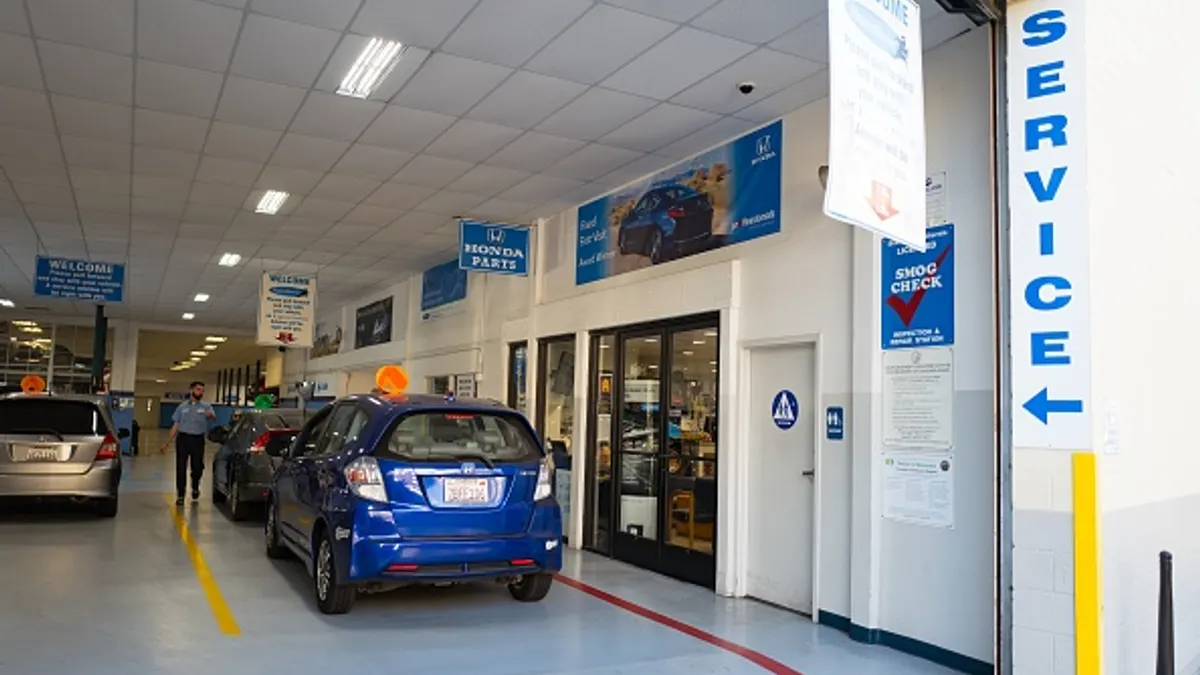
GM’s recall remedy last year included two potential fixes: dealers were to inspect engines and repair or replace them as necessary; for those engines that passed the inspection, dealers were instructed to perform an oil change using higher-viscosity oil and replace the oil filter and filler cap.
The NHTSA’s engineering analysis opened in October and was an escalation from its preliminary investigation from January 2025. It was opened after the NHTSA received 1,157 vehicle owner questionnaires alleging engine bearing failures in GM vehicles, 173 of which were outside the scope of the April 2025 recall.
The engineering analysis remains open and the agency works to complete these types of investigations within 18 months. If the NHTSA’s analysis determines that an engine defect exists, it could require GM to issue a major recall.
GM’s 6.2L V-8 engine was first introduced in model year 2019 and is used in some of its top-selling models. The automaker has been aware of problems for some time. Shortly after its debut, customers complained of unusual noises, power loss and no-start conditions.
GM launched its first investigation into the problem in February 2022. Two additional investigations followed, which were closed in June 2023 and July 2024, respectively. Based on the available information GM had at the time, the root cause was not initially identified, according to the NHTSA recall report.
The fourth investigation, which was initiated by GM after the NHTSA opened its probe in January 2025, used an updated field data analysis to identify a suspect build period: March 1, 2021, to May 31, 2024. According to the recall report, 6.2L V-8 engines manufactured between these dates showed a higher rate of failure claims.
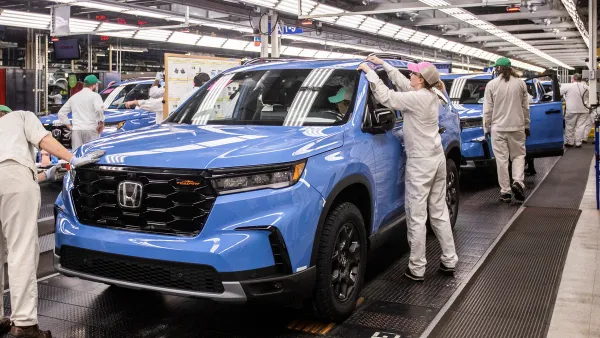
As of June 1, 2024, GM introduced quality improvements to its engine manufacturing process to address contamination and quality issues, according to the recall report.
Eric Walz contributed to this story.