Upstart battery-electric-vehicle maker Lucid misses its financial forecast for the second quarter and cuts its production forecast, disappointing investors who sent the company’s share price down.
Lucid reports Q2 revenue of $259.4 million, a slight miss on the $262.4 million expected per a Bloomberg consensus, but higher than the $200.6 million it booked a year ago. The company posts an adjusted loss of $0.24 per share versus $0.22, with an adjusted EBITDA loss of $632.1 million vs $603.6 million expected.
The company ended the quarter with $4.86 billion in total liquidity, an important figure given Lucid’s cash burn. Gross margin, Lucid says, dropped 21% because of tariffs.
Lucid expects 2025 production output to be between 18,000 and 20,000 vehicles, below the 20,000 target it stated earlier this year.
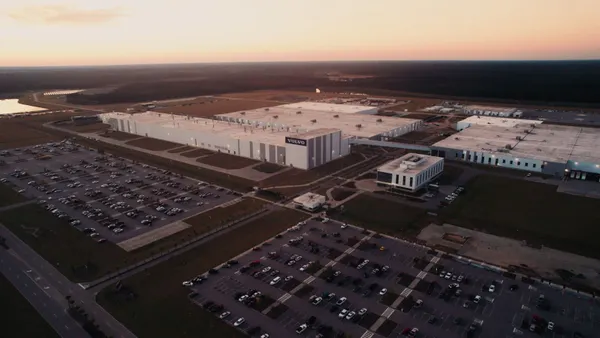
The nascent automaker for 3½ years was selling just one model, the Air luxury sedan, but now is ramping up production of its new Gravity SUV, albeit at a slow rate. In the first quarter of 2025, Lucid produced fewer than 1,000 units, most of which were shipped to Saudi Arabia. Lucid is backed by the Saudi Public Investment Fund (PIF), although its vehicle-assembly plant is in Casa Grande, AZ.
In total, Lucid produced 3,863 vehicles and delivered 3,309 in the April-June period, with its total for the first half of the year hitting 6,075 vehicles produced and 6,418 vehicle delivered, the company reports.
To boost its sales volume, Lucid said in July it is partnering with Uber to create a robotaxi service run by the ride-hailing company, resulting in a planned sale of 20,000 Lucid BEVs over the next five years.
Given the company’s low stock price, Lucid also says it plans a 1-for-10 reverse stock split. Taking shares out of the market will push up the share price to around $10 per share based on current valuation and guard against shares falling below $1 a share.
The expected loss of the U.S. government’s $7,500 federal tax credit for BEVs coming on Sept. 30 is taking some wind out of Lucid’s sails and rival all-electric models from better-known premium competitors including Tesla, Cadillac, Audi and BMW are all being heavily marketed. Their BEVs are seen by industry-watchers as having an advantage over Lucid in the coming years due to greater brand recognition by consumers.