

Jaguar Land Rover Automotive saw revenue slump in the last three months of 2025, but that hasn’t stopped the automaker from pressing ahead with changes to its powertrain strategy.
The automaker, which suffered a global shutdown of vehicle production in September due to a cyberattack, saw revenues fall to £4.5 billion ($6.1 billion), 39% below the same period last year. The decline was blamed on a reduction in wholesale volumes as a result of the cyberattack, and the time required to bring production back to normal levels, the company said in a Feb. 5 statement.
However, other factors affected volumes and profitability too, such as tariffs and JLR’s continued planned wind-down of legacy Jaguar models ahead of a new model launch.
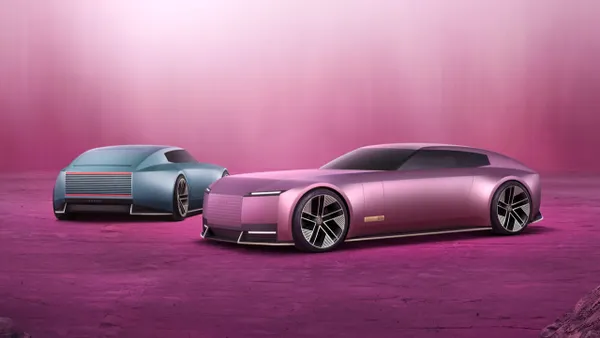
Nonetheless, JLR’s statement doubled down on its insistence that the historic Jaguar marque will continue only as an exclusively electric brand.
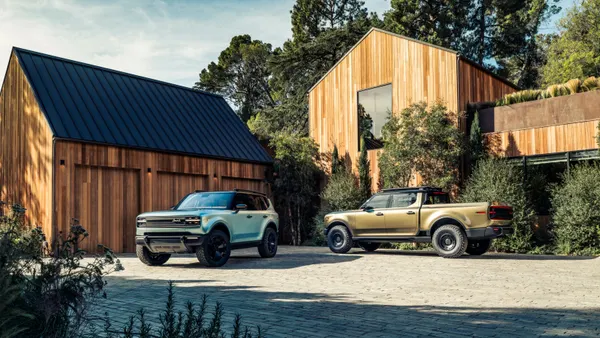
At the same time, the group will maintain an agnostic approach to powertrain options for its Land Rover/Range Rover brands.
“The flexibility of our world‑leading powertrain technologies means we can continue to offer hybrid and ICE vehicles in our ranges as we begin to roll out full BEV options to match demand in the global transition to electric,” the company said in its statement.
Industry observers may ask if the battery-electric vehicle strategy for the group’s oldest brand, Jaguar — which can trace its roots back to the SS Cars performance sedans of the 1930s — is a good one in the current market?
“Short answer, no,” Adam Ragozzino, Omdia’s principal analyst for batteries and electric powertrains, said when WardsAuto asked the question in an email. “Looking at the powertrain mixes of Jaguar and its competitors, ICE-only still makes up the bulk of competitors' mix.”
He went on to note that BEVs have been a small part of the brand, achieving about 10% of the mix since 2020, and by the end of 2025 they accounted for just 1% of the mix, with 90% of sales driven by ICE.
“So, they are literally trying to go from 0% to 100%,” Ragozzino said. “Just to drive that point a little more, in Q2 2025 Jaguar sold about 5,800 non-BEV units and only 200 BEVs. Getting BEVs to scale from that point will be an enormous lift.”
This radically changed brand will have to decide between competing as a small-volume high-end player against brands like Rolls-Royce and Bentley, or target volume rivals such as Mercedes-Benz, BMW, Lexus, etc.
“I don't think BEV-only gets them to volume anytime soon,” added Ragozzino. Referencing the JLR Group’s current financial challenges: “They are starting their electrification bet from a weak base,” he said. “Winding down ICE sales, the cyberattack and lost share in China have really cost them financially,” concluded Ragozzino.
Looking ahead, JLR’s investment spend is expected to remain at £18 billion over the five‑year period from full-year 2024. Full-year 2026 guidance is reaffirmed, with EBIT margin in the range of 0% to 2% and free cash outflow of £2.2 billion to £2.5 billion.
“While the external environment remains volatile, we expect performance to improve significantly in the fourth quarter and we have clear plans to manage global challenges,” said JLR CEO P.B. Balaji. “2026 is set to be an exciting year for JLR as we develop our next generation vehicles, including the launch of the Range Rover Electric and the unveiling of the first new Jaguar.”