Dive Brief:
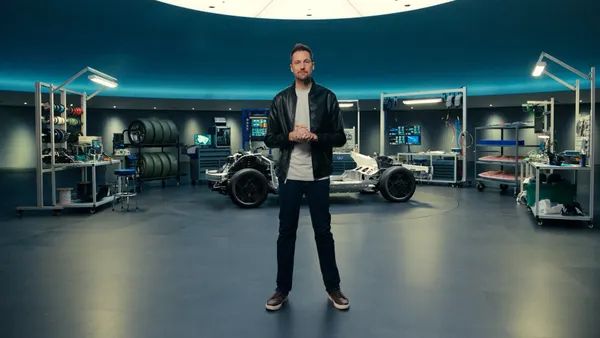
- Honda Motor Co. unveiled its next-generation hybrid-electric (HEV) vehicle technologies at the company’s “Honda Automotive Technology Workshop” media event in Japan on Oct. 29.
- Among the announcements was a new mid-size platform for Honda’s future hybrid vehicles; a new V6 engine for full-size hybrid vehicles; and technologies for a production model of the “Super-ONE” Prototype compact electric vehicle that was unveiled at the Japan Mobility Show 2025.
- As other automakers revise their EV rollout timelines due to sluggish sales, low margins and high development costs, Honda announced in May that it’s also reassessing its EV strategy and roadmap. But its global CEO, Toshihiro Mibe, said he believes that HEVs will play a key role in the company’s long-term transition towards full electrification, especially in the North American market. The automaker aims to sell 2.2 million HEVs a year by 2030.
Dive Insight:
At the Honda Business Briefing in May, Mibe also said the automaker is working to boost its competitiveness in the HEV and EV markets by offering new value and intelligent technologies to customers. The new hybrid vehicle platforms and compact EV will support this initiative.
Honda’s future mid-size HEV platform
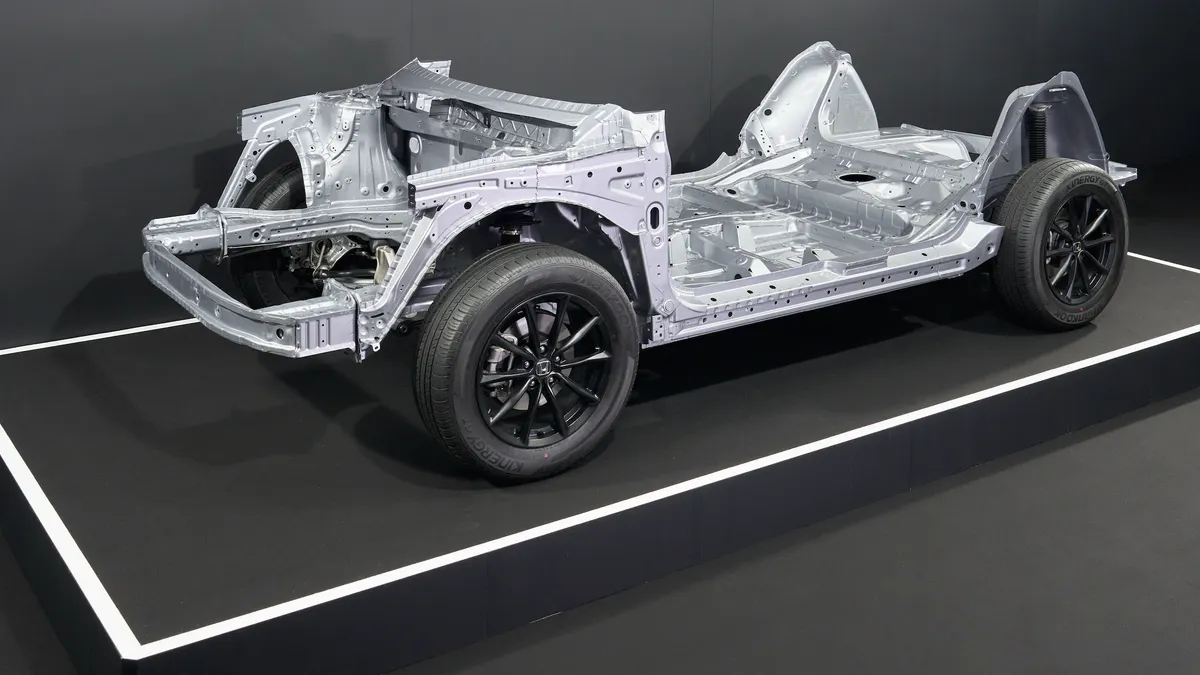
Honda’s next-generation mid-size hybrid vehicle platform combines innovative technologies, per a company news release. It includes a newly engineered body structure with high rigidity and a modular architecture that enables greater parts commonality across models. In addition, the weight of the new HEV body was reduced by 198 lbs. (90 kg) compared to Honda’s current platform, the release says.
Honda is also aiming for 60% parts commonality across future HEV models with the new platform, which it also says will reduce costs and enable more efficient production.
Among the other highlights of the new mid-size HEV platform is a unique flexible body structure that Honda says reduces weight and enhances driving stability. The body structure is designed to flex during cornering to control the load of each wheel and improve traction. The platform will provide drivers with a “sporty and exhilarating driving experience,” according to Honda. The automaker also plans to adopt the new body design for its future EVs.
Honda also plans to add a new pitch control technology to its “Agile Handling Assist” electronic vehicle control system to its new HEV platform that’s currently offered in Accord and Prelude models. According to Honda, the driver assist technology supports smooth vehicle behavior during cornering to enhance control in all driving situations and road conditions.
The new mid-size hybrid platform will be integrated in Honda vehicles from 2027 onward.
Large-size hybrid platform and six-cylinder engine
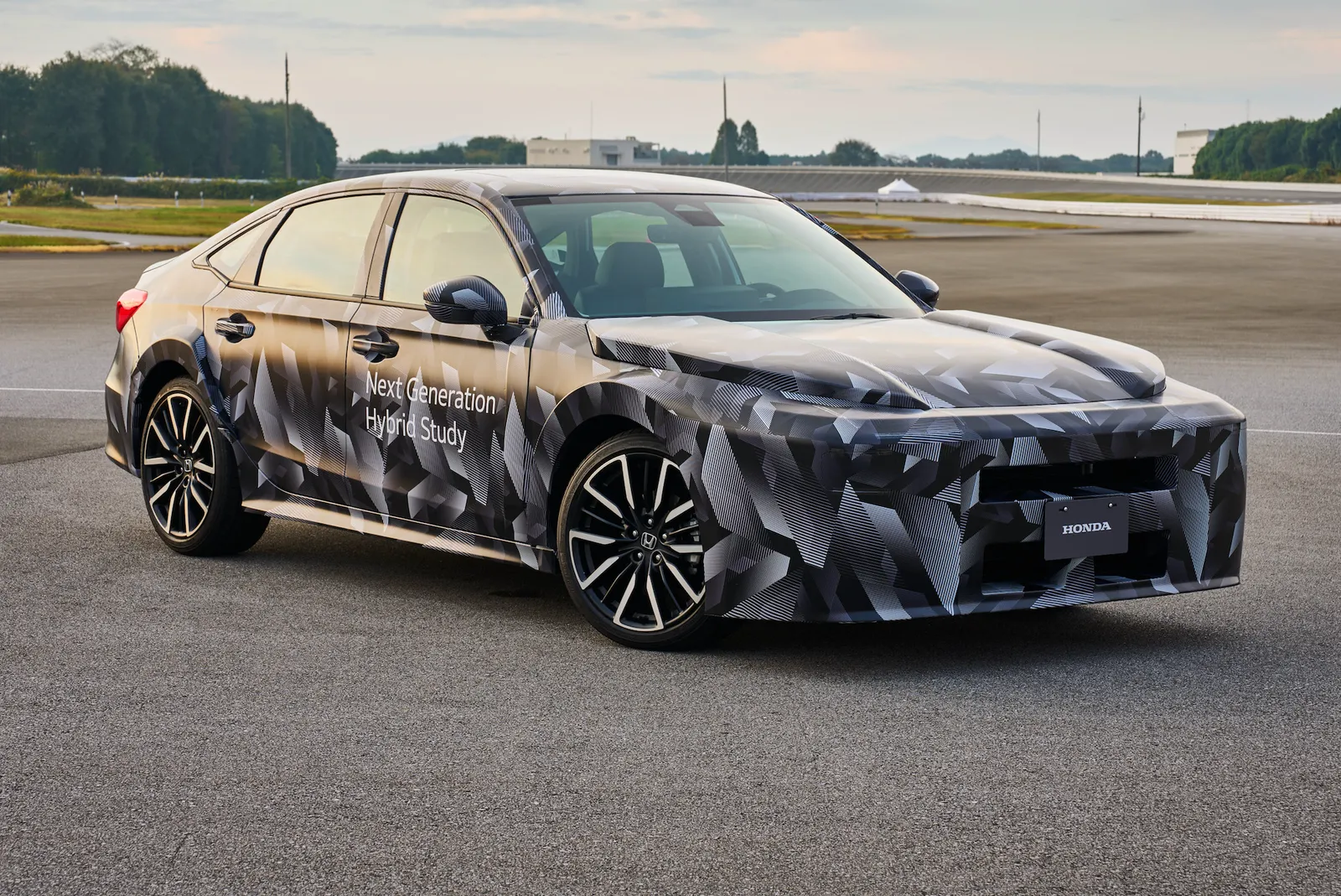
Honda expects that North America will be the main global market for its full-size HEVs, such as SUVs, and expects strong demand for these future models. The company is developing a next-generation hybrid system it says offers a high level of performance and increased towing capacity.
Honda aims to improve full-throttle acceleration performance of its larger HEVs by more than 10% compared to its current internal combustion engine models in the segment. The automaker aims to achieve this by improving powertrain efficiency and using the vehicle’s battery for propulsion assist. In addition, the large HEV platform's drive units and battery packs offer lowered costs compared to current systems, according to Honda.
The company also unveiled a new V6 gas engine for full-size HEVs that it says meets stringent environmental regulations. The automaker will pair the engine with highly-efficient electric drive units and a next-generation energy management control system, which the company says optimizes each drive mode to improve efficiency. Honda aims to improve the fuel efficiency of the HEV platform by over 30% compared to its current gas-powered vehicles in the same segment.
The first full-size HEV built on the new platform is targeted to launch in North America in the second half of the 2020s.
The new compact EV based on Honda’s Super-ONE Prototype
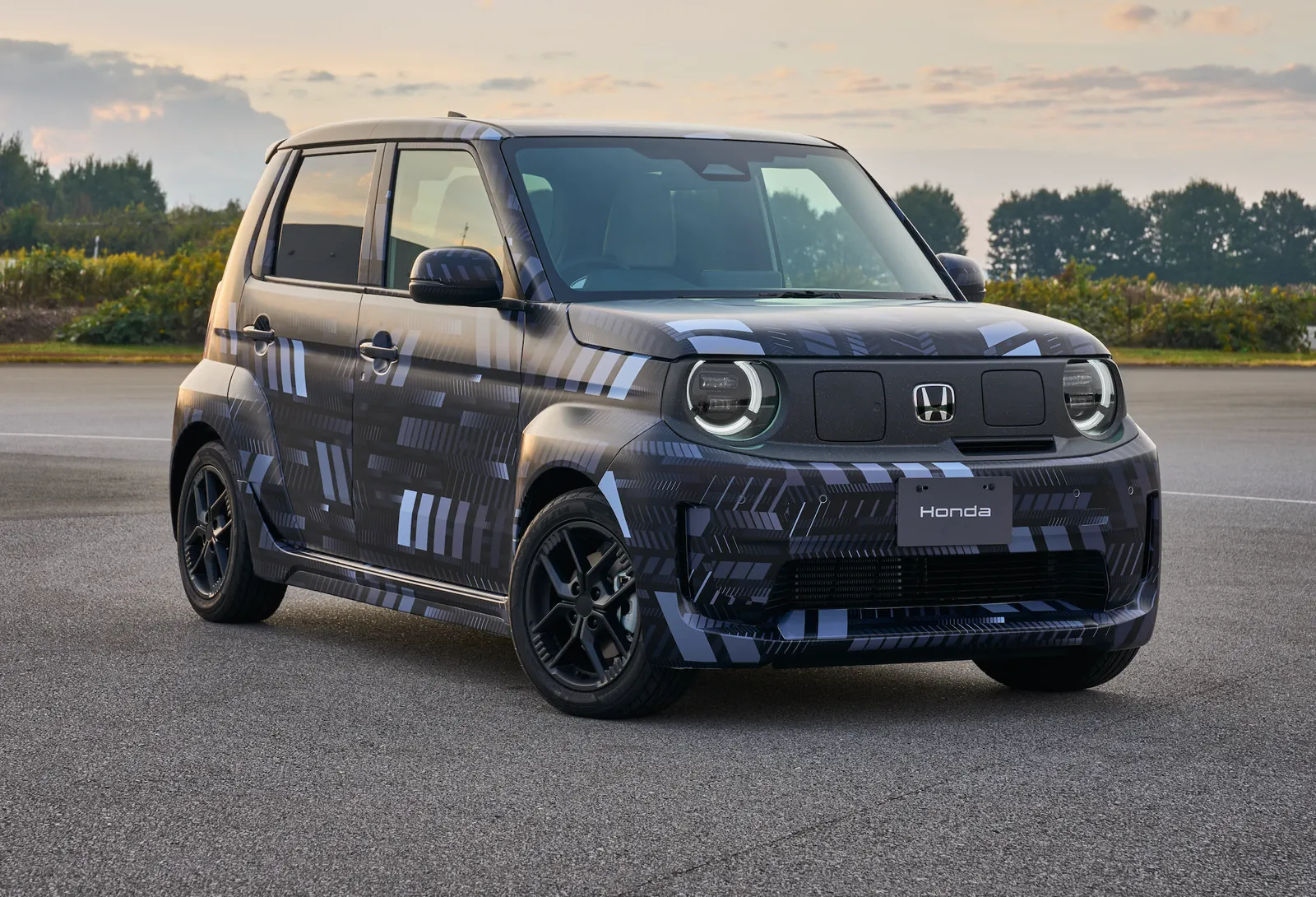
Honda plans to launch a compact EV based on the Super-ONE Prototype it unveiled at the Japan Mobility Show on Oct. 29. Honda refers to the small EV as “e: Dash BOOSTER,” and it’s intended to transform everyday mobility by making the in-vehicle experience more enjoyable for occupants, per the release.
The production version of the Super-ONE will be based on a lightweight platform that’s being developed for Honda’s N Series electric models. Among the design elements is a wide body and dedicated chassis with wider fenders. Honda engineers located the vehicle’s heavier mechanical components, including the battery pack, at the center of the EV’s underbody to improve handling. The design results in high responsiveness to driver inputs and stability when cornering, according to Honda.
The compact EV also has one of the most lightweight bodies among A-segment EVs, with a lower center of gravity compared to conventional gasoline-powered compact cars, Honda says.
The production version of the Super-ONE will offer a “boost mode” to increase power output, which Honda says was developed specially for this A-segment model.
The EV will also feature a simulated 7-speed transmission that mimics upshifts and downshifts of an ICE vehicle with a conventional gearbox, which rival Hyundai currently offers in the Ioniq 5 N high-performance EV. To provide better driver feedback, it’s paired with an “Active Audio Sound” control system that simulates a high-revving gas engine and gear shifts. The goal for Honda was to deliver a more engaging driving experience for the Super-ONE taken from its years of ICE vehicle development.
The compact EV is slated to launch in Japan in 2026, before rolling out to the U.K. and other Asian markets. Honda says that demand for small EVs remains high in these regions.
Honda’s new electrification technologies align with its long-term goal of achieving “carbon neutrality for all of its products and corporate activities globally by 2050. The automaker also aims for zero fatalities from traffic collisions involving its vehicles by integrating advanced safety technology, including automated driving capabilities.
In August, Honda announced a multi-year development agreement with California-based autonomous driving software developer Helm.ai for the automaker’s next-generation automated driving system. The collaboration will focus on the development of new AI-powered advanced driver assist systems for Honda vehicles, as well as the automaker’s “Navigate on Autopilot” self-driving platform.
Honda also plans to offer a more advanced “hands-off” autonomous driving system that operates accelerator and steering throughout an entire route to the destination, with mass production targeted after 2027.