

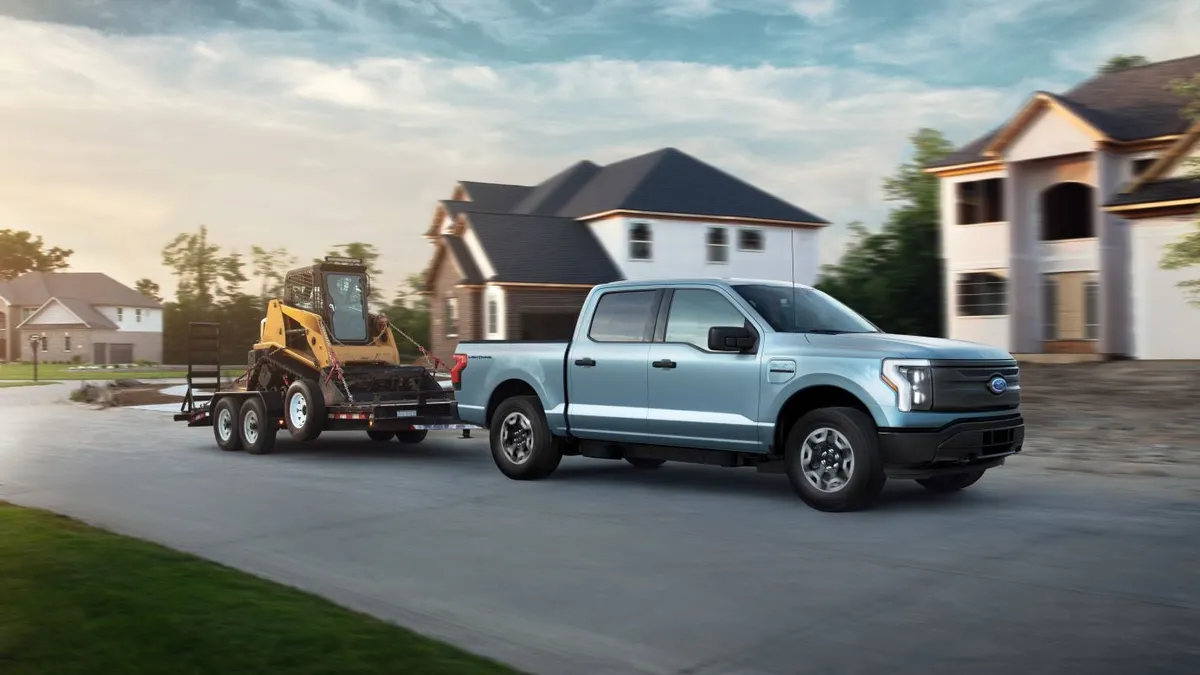
Ford Motor Co. will cease production of the all-electric F-150 Lightning pickup by the end of 2025 less than four years after its launch.
At the same time, the company announced in a Dec 15. statement that the second generation of the F-150 Lightning will come with a gasoline range-extender powertrain.
The Extended Range Electric Vehicle (EREV) technology, first developed in 1901 by automotive engineer and Porsche founder Ferdinand Porsche, resurfaced in 2010 when General Motors launched the Chevrolet Volt, marketed at the time in Europe as the Vauxhall/Opel Ampera.
Unlike a regular or plug-in hybrid vehicle, the internal combustion engine in an EREV functions solely as a generator, creating electricity to charge the battery or power the electric motors. The engine has no mechanical connection to the vehicle’s electric powertrain and is not used to drive the wheels.
Disappointing EV sales in the U.S. appear to have forced Ford to bow to consumer demand for vehicles able to take on longer journeys.
Ford says the EREV pickup claims a maximum range of 700 miles versus the 320-mile limit for the all-electric F-150 Lightning with the largest available battery pack.
Ford is not alone in turning its back on electric trucks. Stellantis announced Sept. 12 that it had shelved plans for an electric Ram pickup and instead would launch the Ram 1500 REV with a six-cylinder gas engine paired with a generator.
In separate Dec. 15 statement, Ford announced that it was declaring a $19.5 billion write-down related to its EV investments with most of the cost falling in the fourth quarter 2025.
The company also announced a business strategy pivot to more electrified powertrains including hybrids.
“This is a customer-driven shift to create a stronger, more resilient and more profitable Ford,” said Ford President and CEO Jim Farley in the company statement. “The operating reality has changed, and we are redeploying capital into higher-return growth opportunities: Ford Pro, our market leading trucks and vans, hybrids and high-margin opportunities like our new battery energy storage business.”
Like the outgoing F-150 Lightning, the EREV version will offer exportable electricity that can power everything from worksites to campsites to homes during a power outage.
"The F-150 Lightning is a groundbreaking product that demonstrated an EV pickup can still be a great F-Series," said Doug Field, Ford's chief EV, digital and design officer, in a statement. "Our next-generation F-150 Lightning EREV will be every bit as revolutionary. Heavy-duty towing and cross-country travel will be as effortless as the daily commute,” he added.
Ford said the F-150 Lightning EREV would be built at the Rouge Electric Vehicle Center in Dearborn, Mich., where production of the battery-electric F-150 Lightning will end this year. The automaker promises more details on the new pickup closer to the expected 2027 market launch.