Yes, the $7,500 federal tax credit for an electric vehicle purchase has ended and yes, EV sales are slowing. But demand won’t collapse, according to Urban Science.
Several pillars of support for the EV market aren’t going away, and those will create a floor to any sales slowdown, Tom Kondrat, global lead for advanced analytics at Urban Science, told Wards Auto. The five pillars Kondrat named include:
- Current BEV owners like their vehicles and will continue to buy electric vehicles
- More market entries at lower price points
- Rising consideration of BEVs as consumers see more on the road
- Continued manufacturer purchase incentives
- Expanding public charging infrastructure
“We don’t see battery electric (vehicle) demand collapsing,” he said in an interview. “While the fourth quarter may be rocky, in the next 12 to 24 months we see stability in demand.”
Longer term, Urban Science projects demand for electric vehicles to grow gradually, Kondrat added.
In the third quarter of this year, demand for battery electric vehicles rose 29% compared to the same quarter in 2024, Urban Science found. BEV sales accounted for 11.7% of all retail sales.
That surge in demand was largely driven by the end of the $7,500 federal tax credit for a BEV purchase on Sept. 30, Kondrat said. “What we had in the third quarter was a ton of shopper hype,” he said. “The incentive going away pushed (sales) up.”
But over the next 12 months, Urban Science expects BEV sales to stabilize at between nine and 10 percent of the market, Kondrat said.
Dive deeper into the five factors continuing to support BEV demand, below.
1. BEV owners will buy another BEV
Experian found there were more than 4.69 million battery-electric vehicles on the road in the United States as of the second quarter of 2025, a spokesperson said in an email to WardsAuto.
And many are happy with their purchase, Kondrat said.
“A lot of people who drive and own an EV like that experience,” he said.
Many of those BEV drivers have also invested in home charging, Kondrat added, and they are likely to acquire another electrified vehicle. “That will maintain a certain pace” of BEV sales in the future, he said.
2. More affordable choices
Not so long ago, Tesla was the only real competitor in the BEV market and its most inexpensive model started at above $42,000. It recently announced two lower-priced, but deeply de-contented, models.
Meanwhile, many more models at similar or lower price points than Tesla’s are entering the market, Kondrat said. That will maintain BEV demand.
“Affordability is key,” he said.
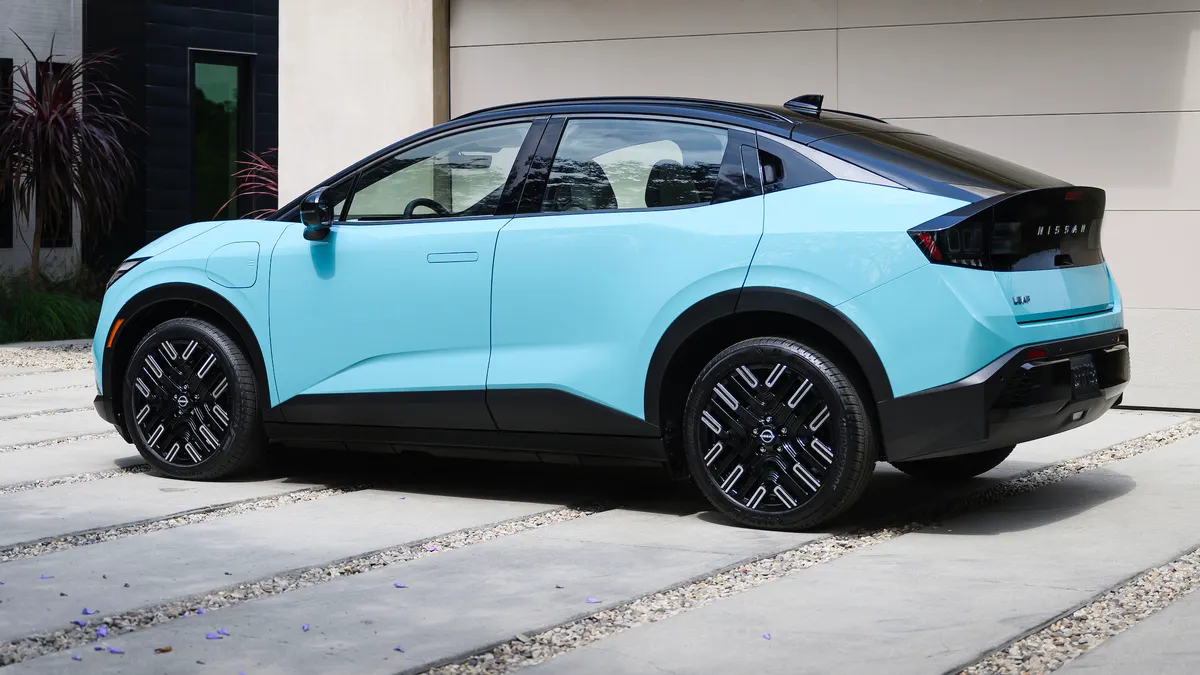
Consider some of the options: the new Nissan Leaf starts at just under $30,000. Volkswagen, Chevrolet, Hyundai and Kia offer BEVs starting around $40,000 or less. And the Rivian R2 is set to arrive in 2026 with an entry-level price of around $45,000.
“If you look at the landscape, there is more movement in the middle market,” Kondrat said.
That will help build a floor under the demand slowdown, he said.
3. Familiarity with BEVs boosts consideration
As BEV adoption moves into the mainstream, more consumers will know a BEV owner, and have more experience with BEVs. As with any new technology, increased knowledge and experience with BEVs will boost demand, Kondrat said.
“Adoption is a social process,” he said.
And since the majority of BEVs sold are leased, “every year now we have more consumers being introduced to BEVs via the used market,” Kondrat said.
4. Manufacturer incentives will continue
Automakers have invested hundreds of millions to build electric vehicle production infrastructure. While they may now be scaling back that pace of investment, automakers aren’t going to abandon electric vehicles, Kondrat said.
They seek a return on that investment, which means manufacturer incentives will take the place of federal tax incentives, which will also help maintain BEV demand, he said.
“Many manufacturers are releasing their own incentives,” Kondrat said.
Ford and Hyundai, for example, are offering BEV purchase incentives to offset the loss of the federal tax credit.
Going forward, Kondrat expects manufacturers to reduce content on their BEV offerings to keep the price low, and to find other ways to align supply and demand for electric vehicles.
Meanwhile, the price of EV technology, including the battery, is already coming down, he said. That will increase EV consideration over time.
5. Charging infrastructure is expanding
According to the Joint Office of Energy and Transportation, the number of DC fast charging ports in the United States rose by more than 80% in the previous two years to more than 60,300 at the end of August.
Having more, and more visible, fast charging networks also fast charges EV adoption, Kondrat said. BEVs have over 35% of the market in Boulder, Colorado for example, and “the Denver area has a very robust charging infrastructure,” Kondrat said.
To be sure, the Denver area has “the right demographics” for BEV sales, Kondrat said. But areas that might not seem as obviously BEV friendly also are seeing healthy growth, he added.
BEV sales in Florida, for example, rose 52% compared to the same quarter in 2024, Kondrat said. “Florida has been above average in demand for BEVs on a market share basis.”
A 2024 study by The Harris Poll and Urban Science found that while only 26% of consumers would be ready for “EV only options” by 2025, that is expected to double to 50% by 2035.
To be sure, reaching that level will require targeted and sustained marketing by automakers and dealers as well as continued growth of charging infrastructure. But the BEV market is definitely not falling off a cliff just because federal tax credits ended.
“Consumers are coming around,” Kondrat said.