The East-West Technology Race Intensifies
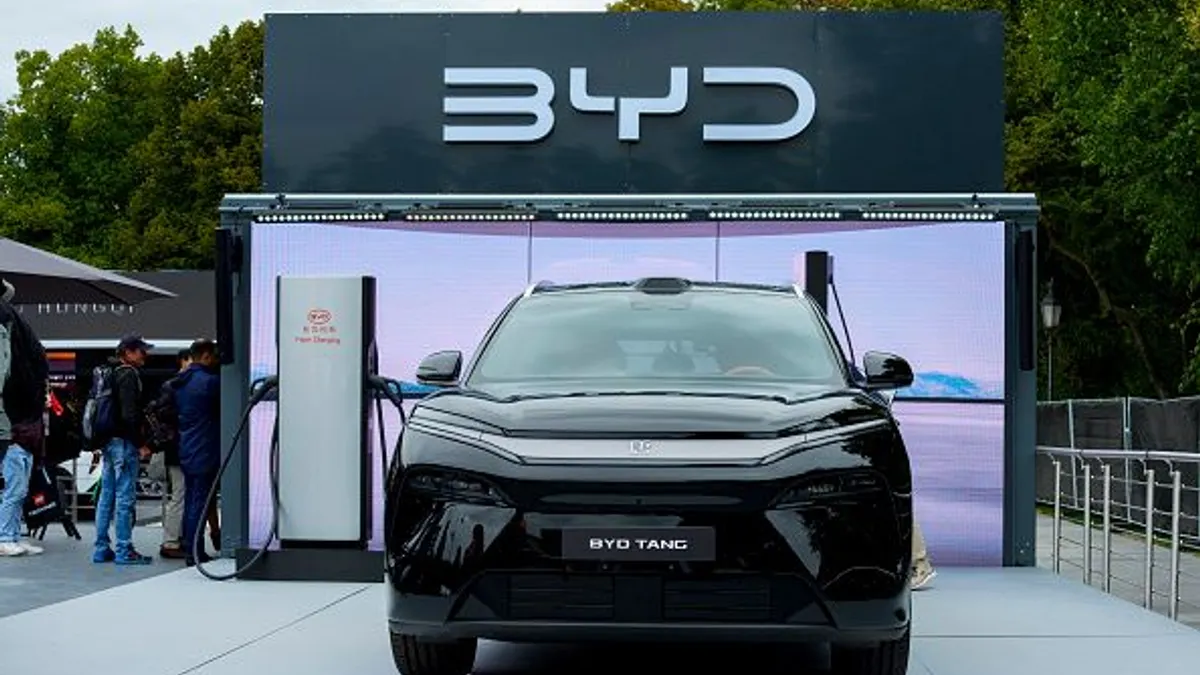
The automotive landscape is witnessing a pivotal shift as Chinese manufacturers challenge European dominance. Chinese players have methodically built their capabilities since 2005, starting with European design centers, expanding to R&D facilities, and now establishing local distribution networks. At IAA, the symbolic reversal of European engineers studying Chinese vehicles underscored this shift in innovation leadership. Chinese manufacturers now possess advanced technology and quality but must build consumer trust and demonstrate staying power.
Meanwhile, European OEMs face mounting pressure to prove they can develop and deploy technology at pace with consistency. The profit warnings from Western manufacturers reflect the financial strain of this transition, forcing traditional suppliers to adapt to new market realities as Tier One suppliers answer to different masters in the evolving ecosystem.
Software-Defined Vehicles Redefine Industry Economics
The transition to software-defined vehicles (SDVs) dominated IAA discussions, revealing an acceleration of transformation timelines. While the VDA alliance officially targets 2030 for SDV production, industry insiders suggested testing could begin by 2026 with production starting as early as 2028.
Financial sustainability emerged as a critical concern, with examples like Cariad's challenges and Rivian's software implementation on Audi vehicles highlighting the inefficiencies in traditional development approaches. The industry appears to be considering open-source vertical stacks while managing horizontal ecosystems at multiple layers – a potential solution to the resource drain observed in initiatives like the eSYNC alliance, where common elements consume development resources but add minimal technical value.
Consumer-Centric Mobility Outpaces Industry Understanding
Perhaps most critically, IAA Mobility 2025 revealed that consumer needs may evolve faster than automakers' understanding and product plans. The acknowledgment that there is "no common dream of future mobility" emphasizes the necessity of user-focused approaches over technology-driven development.
The industry must create business models based on workflows and outcomes to demonstrate financial viability to investors who have yet to recognize alternative revenue models. This represents a fundamental shift for an industry historically driven by product rather than user experience, requiring automotive leaders to rethink how they create and capture value in the mobility ecosystem.
The 2028 Inflection Point
The observations from IAA Mobility 2025 point to 2028 as the critical inflection point for the automotive industry. As VDA alliance timelines suggest, this is when software-defined vehicles will begin mass production, Chinese manufacturers will have established their European presence, and digital transformation initiatives will have either succeeded or failed.
By 2028, the industry will clearly distinguish between those who have successfully navigated the digital metamorphosis and those who haven't. Companies mastering software development, data architecture and ecosystem partnerships while maintaining consumer focus will emerge as the automotive leaders of tomorrow. Those clinging to traditional approaches and organizational structures risk becoming the next Nokia or Kodak of transportation – once-dominant players rendered irrelevant by their failure to adapt to technological disruption.
For automotive executives, the question becomes what legacy they wish to leave: "A dead company or a software legacy and experience that can be used to help define the future of mobility?" The clock is ticking, and the transformation must begin now.
Steve Bell, Omdia Chief Analyst, Automotive Connectivity
The Transformation Gap: European OEMs' Progress and Persistent Challenges
IAA Mobility 2025 initially appeared to mark Europe's awakening to competitive threats, with impressive vehicle launches generating significant media attention. Yet beneath the polished presentations and optimistic rhetoric, a different reality emerged: an industry still fundamentally uncertain about its strategic direction while Chinese manufacturers and their ecosystem partners confidently dominated the show's most substantive conversations.
European automakers showcased technological advancements such as the BMW iX3 and Audi Concept C. Geoffrey Bouquot, Member of the Board of Management at Audi AG, refreshingly acknowledged on a panel that by 2030, differentiation between ADAS systems will be measured by software competence and how well OEMs orchestrate in-car agents.
However, further discussions revealed a profound disconnect between these public ambitions and organizational readiness to execute on this vision. Business decisions remain anchored to bill of materials calculations rather than total cost of ownership, overlooking software maintenance costs and limiting recurring revenue potential, and teams rely on outdated key performance indicators (KPIs) that hinder innovation; for instance, software-based preventive maintenance is labeled as "recalls."
This lack of distinction between hardware failures and proactive improvements penalizes practices that could enhance vehicle quality, ultimately weakening OEMs' competitive position.
While R&D and CTO offices understand industry direction, this rarely translates into organization-wide transformation. Traditional leadership, particularly in premium brands, complacently believes European customers will remain loyal despite Chinese competition. Also, excessive premium-brand portfolios and product complexity persist, contradicting the streamlined strategies of newer market entrants.
The European automotive industry speaks the language of transformation convincingly, yet its ambitions often lack substance, with projected confidence masking a concerning reality gap between Chinese manufacturers' comprehensive transformation and European OEMs' surface-level changes.
The Customer-Centric Approach Gap
The IAA revealed a stark contrast in customer-centricity between European and Chinese manufacturers. While European OEMs showcase technological advancements, Chinese manufacturers such as Leapmotor emphasize co-creation with customers, building vehicles that directly respond to user needs.
European manufacturers are still transitioning from a B2B mindset to a B2C focus, struggling to prioritize customer experience over cost efficiency. While Chinese manufacturers design their business models around lifetime customer value, including software updates, service opportunities and ecosystem integration, European OEMs predominantly focus on the initial transaction, limiting revenue potential and weakening customer relationships.
The AI Revolution in Mobility
Artificial intelligence emerged as the defining technology at IAA Mobility 2025, reshaping vehicles from conception to experience.
Forward-thinking companies, such as Qualcomm, position AI not merely as a feature but as the new vehicle UI paradigm—replacing traditional controls with contextually aware, conversational interactions.
The Google-Qualcomm partnership exemplifies hybrid AI solutions, combining Google Cloud's Automotive AI Agent with Qualcomm's edge capabilities to balance cloud intelligence with on-device responsiveness. This collaboration marks a critical pivot in Google's automotive strategy, providing white-label voice assistants to the industry.
Companies such as NVIDIA, Google and AWS have demonstrated AI's transformation across the automotive value chain – from design studios using generative AI to accelerate concept development, to manufacturing facilities and personalized sales processes.
Chinese manufacturers have most completely adopted this holistic view, with Xpeng positioning itself as an "AI software stack company" whose technology happens to be used in vehicles. This is a fundamental reframing that many European manufacturers have yet to fully adopt.
Vehicles as Strategic Platforms for Disruption
Today's vehicles represent a unique convergence of multiple technological domains, including enterprise computing power similar to data centers, consumer experience elements from smartphones and wearables and functional safety requirements shared with robotics.
This convergence positions vehicles as powerful instruments of disruption where emerging technologies can be rapidly deployed across different domains, explaining why chip manufacturers and technology companies are merging their manufacturing, robotics and automotive pipelines.
Cross-industry technology stacks shared between vehicles, factories and consumer devices create unprecedented opportunities for Agentic AI integration. This has been noted by companies such as Arm, Qualcomm, AWS and NVIDIA, which are developing unified technology platforms spanning multiple product categories, creating ecosystem advantages.
Maite Bezerra, Omdia Senior Principal Analyst, SDV