Editor's note: This article was originally published in Automotive Dive, which has merged with WardsAuto to bring you expanded coverage of the industry. For the latest news, sign up for our free, daily newsletter.
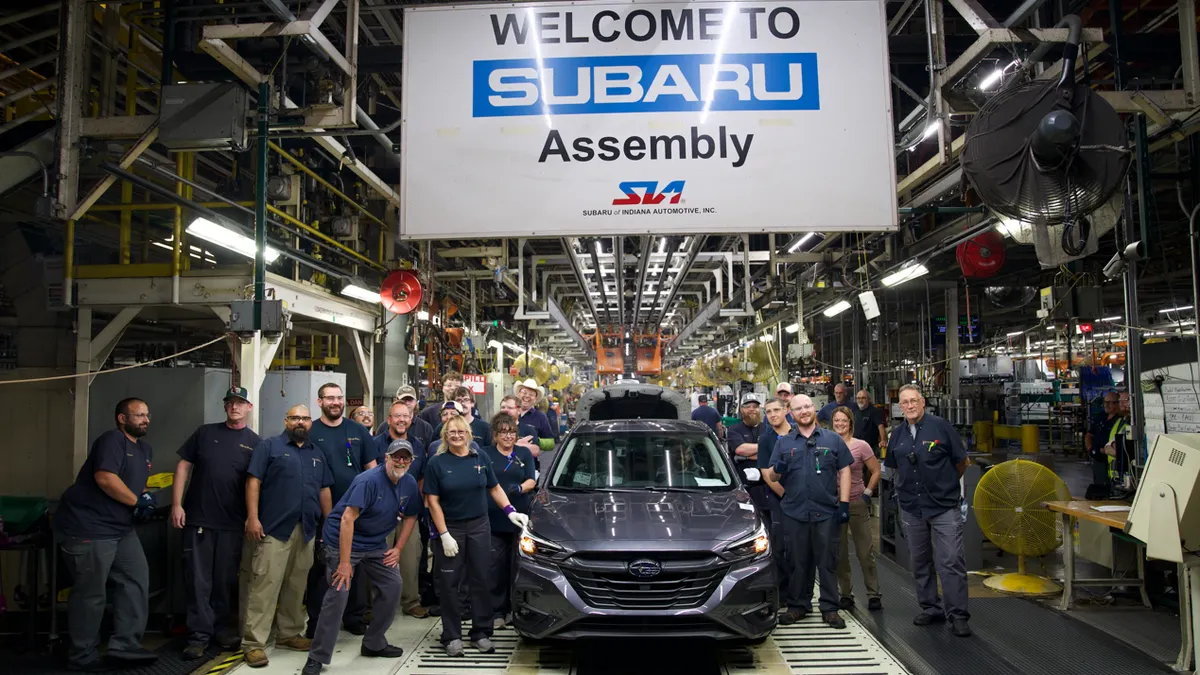
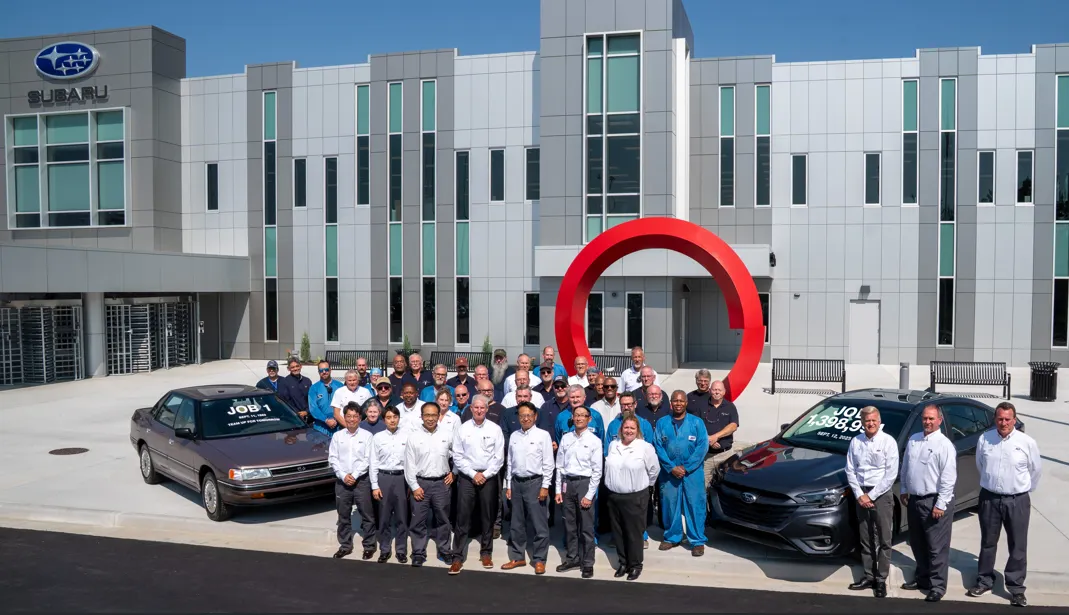
Sept. 12 was a melancholy day for Subaru of Indiana Automotive President and COO Scott Brand. That’s when the final Legacy sedan rolled off the plant’s assembly line, ending a nearly four-decade U.S. production run.
Brand joined Subaru in 1989 as a member of the materials management staff, before the first Legacy was built at the Lafayette, Indiana, plant on Sept. 11, 1989. Now, as the facility’s leader, he said the Legacy “has always held a special place for me.”
“It’s my preferred model,” he said in an email. “So, the end of production is certainly bittersweet.”
The Legacy was the first Subaru manufactured by the Japan-based automaker in the U.S. at the Indiana plant. Since its debut, seven generations of the model have been produced and accounted for nearly 1.4 million U.S. sales, according to the company.
Brand said building the plant, installing equipment and training workers to build the cars “was a monumental accomplishment.”
When Subaru introduced the Legacy, it sought to compete against other mid-sized sedans and wagons in the U.S. market, the company said. The Legacy wagon became the foundation for the Outback crossover, reflecting a market shift away from passenger cars.
Soon, Subaru will also end U.S. production of the Outback as it begins manufacturing the gas-powered Forester crossover later this month, followed by the Forester hybrid in the spring.
Subaru expects to surpass 8 million vehicles produced in the U.S. in November. Its Indiana factory, where it presently produces the Ascent, Crosstrek and Outback models, manufactures about half of all Subaru vehicles sold in North America.
For Brand, he’s looking forward to what lies ahead.
“Bringing gas-powered and hybrid Forester production to the U.S. will provide quicker market response for one of Subaru’s most popular models, while also introducing hybrid processes and technology into our operations,” he said in a press release.
A new chapter
Subaru has been preparing for the production transition since announcing in April 2024 that it would discontinue the Legacy in 2025. The Indiana plant is the automaker’s only factory outside Japan.
Converting production from building sedans to crossovers and SUVs shouldn’t be problematic for Subaru, said Mark Barrott, a partner with accounting and advisory firm Plante Moran.
Though Subaru’s focus on catering to market demands by building SUVs makes sense to Barrott.
“The Legacy has been declining for a long time,” he said. “It’s a sedan and sedans are on the downslope of demand within North America anyway.”
Barrott said historically, the Legacy sedan was a good seller for Subaru, but it faced stiff competition with the Ford Taurus and Chevrolet Malibu.
“It’s always a lower volume type product,” he said of the Legacy sedan.
Timing for producing the Forester in the U.S. couldn’t be better due to higher import duties placed on vehicles made outside the country.
Barrott said Subaru can take the opportunity to reset its manufacturing footprint and strategy and plan for future production capacity needs to accommodate demands in the U.S. and in other global markets.
With Subaru’s competitors, including Honda and Stellantis, rethinking vehicle deployment strategies due to slowing demand for electric vehicles, the automaker could benefit from bolstering U.S. production to continue building gas-powered vehicles along with hybrids, he said. The U.S. is a key market for the automaker, representing more than 70% of its total vehicle sales.
“Subaru is a smart, well run company,” Barrott said. “They have a good product there in the U.S., you know, they’re a bit of a lower volume entity, but in general, I think they’re a very well run organization.”